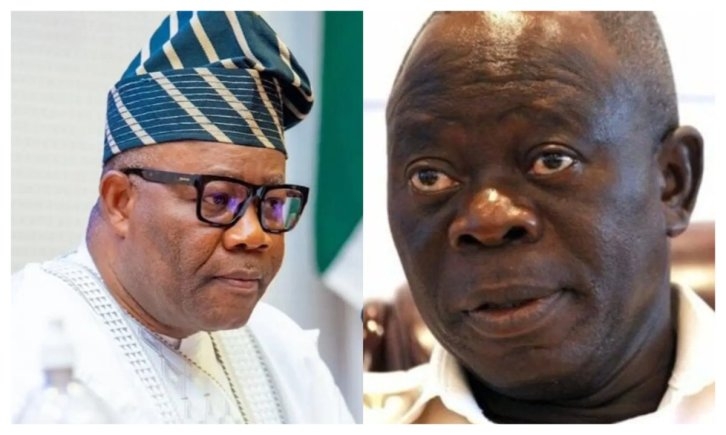
Edo North Senator Adams Oshiomhole has publicly challenged Senate President Godswill Akpabio to lead by example by stepping down from his position, arguing that Akpabio does not meet the proposed eight-year tenure requirement to serve as Senate President. The call comes amid growing controversy over a proposed amendment to the Senate’s Standing Rules, which would bar newly elected senators from becoming principal officers, including Senate President, Deputy President, or Majority/Minority Leaders. Oshiomhole insists that the amendment is hypocritical and morally inconsistent, especially since Akpabio himself became Minority Leader in his first term in the 8th Senate and now presides over the chamber without having served eight consecutive years.
Oshiomhole emphasized that the amendment contradicts the democratic principles enshrined in Section 70 of the Nigerian Constitution, which allows for open voting and accountability in legislative decisions. He questioned the integrity of senators who are now pushing for rules that would effectively restrict future leadership to a select few, likening the move to a form of “family or traditional rulership.” He stressed that such actions undermine the democratic process and discourage fresh leadership in the Senate.
According to Oshiomhole, even if one combines Akpabio’s previous term with his current one, the total service does not amount to eight consecutive years. He argued that if the Senate passes the new rule requiring eight years of continuous service before eligibility for principal offices, then Akpabio must vacate his position immediately to uphold the principle of fairness and consistency. “Let me say why this thing has serious moral crisis,” Oshiomhole stated, highlighting that the current Senate President became a principal officer in his first term, yet now seeks to block others from doing the same.
He further criticized the leadership for attempting to create rules that would perpetuate their own influence, especially as many of them came to power through bye-elections or special appointments. “As leaders who are product of bye-laws, we mustn’t make laws to perpetuate anyone,” he said, urging senators to consider the long-term impact of their decisions on democratic representation and inclusivity.
The debate over the amendment has sparked widespread discussion across Nigerian political circles, with many questioning the ethics of changing rules mid-term to benefit those already in power. Oshiomhole’s remarks have added fuel to the fire, drawing attention to the need for transparency and equity in legislative leadership selection. As the Senate deliberates on the proposed changes, the call for accountability and democratic integrity continues to resonate across the country. This moment may mark a turning point in how Nigerians view leadership succession in the National Assembly.




Leave a Comment