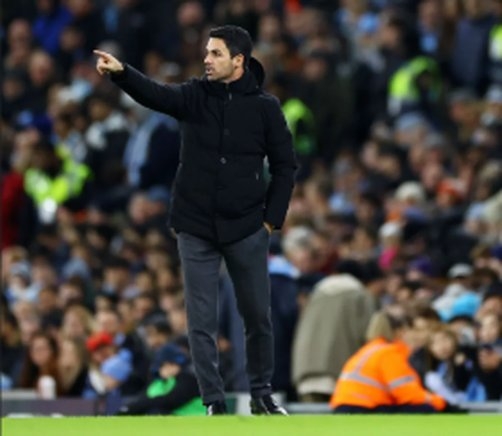
Oliseh emphasized Arteta’s focus on tactical discipline, collective pressing, and positional flexibility as key elements in Arsenal’s resurgence. “Arteta’s emphasis on collective pressing and discipline proved pivotal in reshaping the club culture,” he stated. He pointed to players like Declan Rice and Kai Havertz as examples of Arteta’s preference for versatile, high-energy athletes. “Arteta doesn’t want specialists, he wants heat maps and racers. Players who can win a header in their own box and score a tap-in at the other end within ten seconds,” Oliseh explained. He also credited Arteta’s innovation in set-piece situations, describing how the manager turned dead-ball scenarios into “mathematical certainties” by hiring specialist coaches.
Despite his success, Oliseh acknowledged that Arteta’s intense coaching style had previously backfired. During Arsenal’s 2023 title challenge, the relentless 24/7 pressure caused the team to “red line,” leading to fear-based performances. “He was so intense that the players started to play with fear instead of flow, and that’s one of the reasons they lost the title,” Oliseh admitted. However, he praised Arteta’s ability to adapt, refining his high-pressing 4-3-3 system into a more balanced approach that neutralized elite counterattacks. “Blending Guardiola’s operational position with his street fighter’s intensity to finally challenge for major silverware and prove the disciple has forged his major blueprint,” Oliseh concluded.
Arsenal currently lead the Premier League with 82 points, four ahead of Manchester City, as they celebrate a landmark triumph under Arteta’s leadership. The victory not only marks a new chapter for the club but also underscores Arteta’s emergence as a top-tier manager capable of sustaining success in the most competitive league in the world. As the Gunners look ahead, the foundation laid by Arteta promises to shape the future of English football for years to come.




Leave a Comment