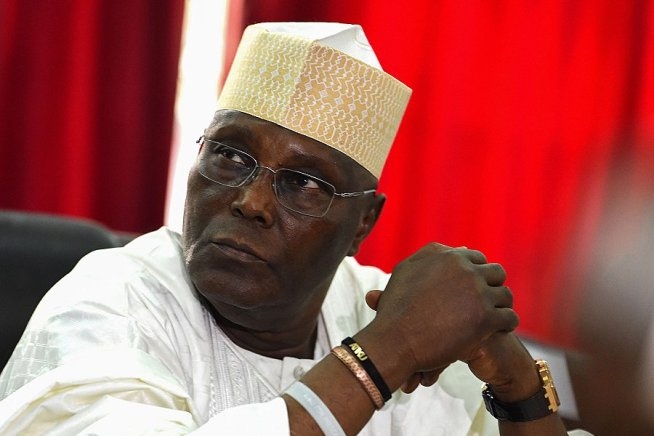
Political commentator Imran Wakili has claimed that the African Democratic Congress (ADC) and former Vice President Atiku Abubakar may be unable to recover from the political setbacks allegedly caused by former Secretary to the Government of the Federation, Babachir Lawal. In a post shared on X on Thursday, Wakili argued that Lawal’s actions have led to the exit of several prominent figures from the ADC, leaving the party significantly weakened and nearly devoid of key supporters. Wakili stated bluntly that “the damage Babachir did to Atiku and ADC—there is no coming back from it!” He listed several high-profile defections, including Bindow, Abbo, Binani, Nyako, and the ongoing legal case against Nafiu Bala, all attributing them directly to Lawal’s influence.
Wakili’s comments come after Lawal officially resigned from the ADC last month, citing deep disagreements with the party’s direction. In his resignation statement, Lawal accused the ADC of operating a “rigging machine” ahead of the 2027 general elections. He further alleged that Atiku and his allies were prioritizing ethnic and religious interests over national unity, a move he claimed would ultimately benefit President Bola Tinubu’s chances of securing a second term. These accusations have sparked widespread debate within Nigeria’s political landscape, with many questioning the ADC’s credibility and internal cohesion.
The ADC, once seen as a potential challenger to the ruling All Progressives Congress (APC), has struggled to maintain momentum since its formation. Lawal’s resignation, coupled with the departures of other key figures, has raised concerns about the party’s ability to field a competitive presidential campaign in 2027. Political analysts suggest that Lawal’s departure may have exposed deep fractures within the party’s leadership and strategy. His public criticism has also drawn attention to the broader challenges facing opposition parties in Nigeria, including internal conflicts and allegations of vote manipulation.
Atiku Abubakar, who remains the party’s presidential candidate, has yet to respond directly to Wakili’s claims or Lawal’s accusations. However, sources close to the ADC leadership indicate that the party is currently working to rebuild its structure and regain public trust. Despite the setbacks, some members remain optimistic that the ADC can regroup and present a viable alternative to the APC. Still, the loss of Lawal and other prominent figures has undoubtedly shaken the party’s foundation.
As Nigeria prepares for the 2027 elections, the ADC’s ability to recover from these internal conflicts will be closely watched. The political landscape remains fluid, and the actions of figures like Babachir Lawal could shape the trajectory of opposition politics in the coming years. The ADC’s future will depend on its capacity to heal divisions and present a united front to Nigerian voters.



Leave a Comment