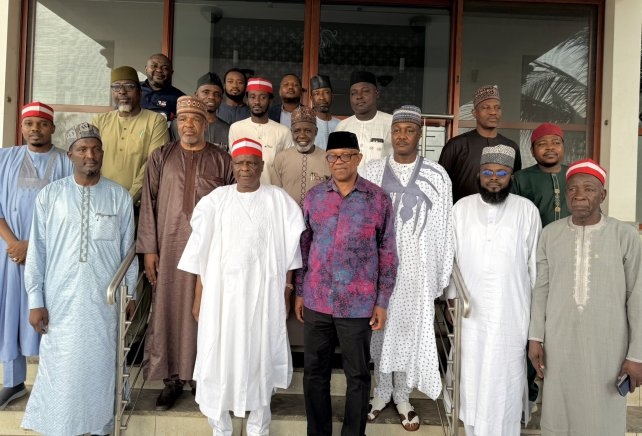
Peter Obi, presidential candidate of the Nigeria Democratic Congress (NDC), and his running mate, Rabi’u Kwankwaso, held a strategic meeting on Monday with key governorship candidates of the party to prepare for the 2027 general elections. The gathering, which took place in Abuja, brought together top party leaders and aspirants from various states to discuss campaign strategies and assess electoral readiness. The NDC emphasized coordinated efforts across all levels of government to ensure victory for its candidates nationwide.
The meeting was officially confirmed through a statement posted on the party’s verified X handle, underscoring its importance in shaping the party’s electoral roadmap. Party leaders focused on building a unified campaign structure that would maximize voter outreach and mobilization. They also reviewed logistical plans, resource allocation, and grassroots engagement tactics designed to strengthen the NDC’s presence in both urban and rural areas ahead of the upcoming polls.
Among those present were the NDC governorship candidates for Bauchi State, Ibrahim Kashim; Sokoto State, Shamsu Aliyu; and Borno State, Sunusi Kashim Ibrahim. Their participation highlighted the party’s commitment to fielding strong contenders across diverse geopolitical zones. Also in attendance were prominent state chairmen, including Buba Galadima, Alhaji Mustapha Umar of Kebbi State, and Alhaji Bello Sani Yabo of Sokoto State, who play crucial roles in organizing party activities at the local level.
The discussions centered on creating synergy between national and state-level campaigns to avoid duplication and enhance efficiency. Leaders stressed the need for consistent messaging, effective use of social media, and door-to-door canvassing to connect with voters. They also explored ways to address challenges such as insecurity, misinformation, and voter apathy, particularly in conflict-affected regions like Borno and Sokoto.
This high-level coordination reflects the NDC’s growing organizational strength and its ambition to emerge as a major political force in Nigeria’s 2027 electoral landscape. By uniting its presidential and governorship candidates under one strategic framework, the party aims to build momentum early and project a credible alternative to existing political parties.
As the election cycle approaches, the NDC’s proactive planning signals a serious bid for power at both federal and state levels. With key figures already aligning their campaigns, the party is positioning itself to influence voter sentiment and reshape Nigeria’s political dynamics in the coming years.

Leave a Comment