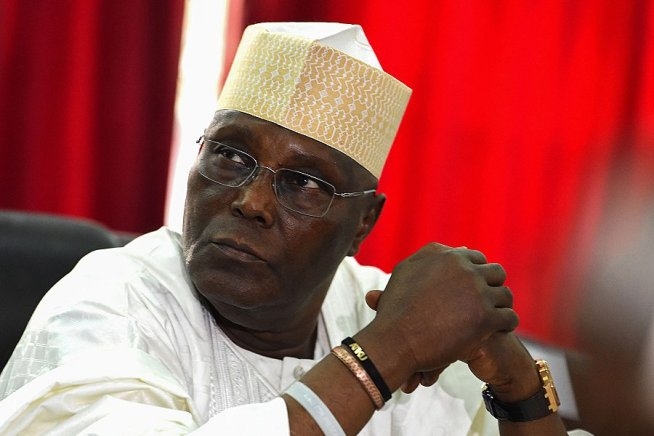
Former Vice President Atiku Abubakar has accused authorities of attempting to block the African Democratic Congress (ADC) from holding its convention in Abuja, calling the move an abuse of public office. In a statement released on April 14, 2026, through his official page, Atiku alleged that efforts are underway to revoke the license of Rainbow Event Centre, the venue designated for the ADC’s upcoming convention. He emphasized that the party has met all legal and administrative requirements for the event, including payment of fees and signing of contracts, and has committed no violations.
Atiku stressed that there is no legitimate legal basis for denying the ADC access to the venue. “The ADC has paid every fee. The ADC has signed every contract. The ADC has broken no law,” he stated clearly in the statement. He framed the alleged actions as a deliberate attempt to suppress opposition political activities, warning that such tactics threaten the foundation of Nigeria’s democracy. “This is how democracies are strangled in a thousand petty, vindictive acts against opposition parties,” the statement read, highlighting the broader implications of the incident.
The former presidential candidate expressed firm resolve, asserting that the ADC convention will proceed as scheduled despite the pressure. “The convention will hold. The ADC will rise. And Nigeria will rise with it,” he declared, underscoring the party’s determination to uphold democratic rights. The ADC, a political party in Nigeria, has been actively preparing for the convention, which is expected to solidify its leadership structure and outline its policy agenda for the future.
The controversy has sparked discussions across political circles and civil society, with many viewing it as a test of Nigeria’s commitment to free and fair political processes. Critics argue that targeting opposition parties through administrative hurdles undermines public trust in institutions. Atiku’s statement has drawn attention to the need for transparency and fairness in the use of public resources and facilities for political events.
As the ADC prepares for its convention, stakeholders are watching closely to see how authorities respond to the allegations. The situation has also reignited debates on the role of state power in regulating political activities, particularly during election periods. The outcome of this matter could set a precedent for how opposition parties are treated in the lead-up to future elections in Nigeria.



Leave a Comment