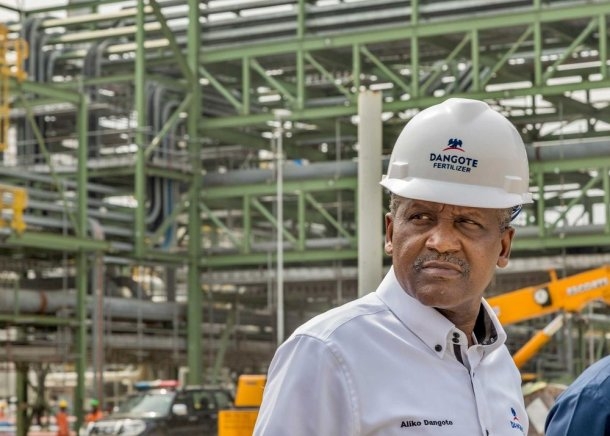
Aliko Dangote is pushing forward with plans to list his flagship Dangote Petroleum Refinery and Petrochemicals on multiple African stock exchanges, marking what could be the continent’s first pan-African initial public offering (IPO) for a major industrial company. The move, which involves strategic coordination with leading financial advisers and African exchanges, aims to unlock equity capital, broaden ownership, and deepen regional capital market integration. The refinery, currently operating at 650,000 barrels per day, is set to expand to 1.4 million barrels per day within the next three years, positioning it among the world’s largest refining complexes.
To execute the listing, Dangote has assembled a financial advisory consortium comprising Stanbic IBTC Capital Limited, Vetiva Advisory Services Limited, and FirstCap Limited. These firms will manage valuation, structuring, regulatory compliance, and investor outreach across different African jurisdictions. The advisory team is working closely with key exchanges, including the Nigerian Exchange Group and the Nairobi Securities Exchange, to ensure alignment and facilitate cross-border participation.
The proposed IPO is part of a broader $40 billion investment strategy by the Dangote Group, which includes expanding refining capacity, boosting petrochemical production, and scaling up fertiliser output. This long-term vision targets greater industrial self-sufficiency across Africa and aims to reduce reliance on imported energy and agricultural inputs. The African Export-Import Bank recently underwrote $2.5 billion of a $4 billion syndicated facility to support the refinery’s expansion, with the IPO expected to complement this debt financing by introducing equity capital.
From a market standpoint, the multi-exchange listing could set a new precedent for capital raising in Africa. It may enhance liquidity, improve price discovery, and attract a wider range of investors across regional markets. For Nigeria, the development offers an opportunity to strengthen its equity market’s profile, especially as it seeks inclusion in global frontier market indices. Increased investor interest could also encourage more companies to list, boosting market depth and resilience.
The broader African continent stands to benefit as well. By enabling investors from multiple countries to access a single, large-scale industrial asset, the offering could accelerate integration among African exchanges and support the creation of a more unified capital market ecosystem. Operationally, the refinery is already supplying refined petroleum products to domestic and regional markets, helping to ease persistent fuel shortages. As production scales, it is expected to play a critical role in reducing Africa’s dependence on imported fuel and stabilising regional energy supply. This landmark initiative could redefine how Africa’s industrial assets are financed and owned in the years ahead.




Leave a Comment