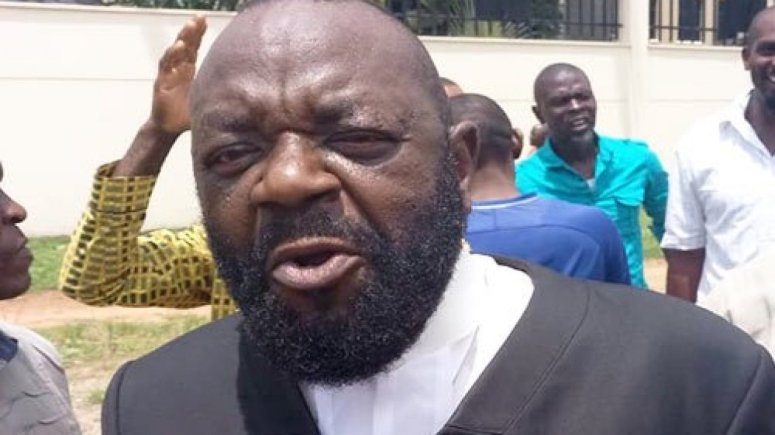
The “City Boy” movement, a pro-President Bola Ahmed Tinubu 2027 re-election campaign group, failed to gain traction in Nigeria’s Southeast, according to Aloy Ejimakor, counsel to Indigenous People of Biafra (IPOB) leader Nnamdi Kanu. Ejimakor attributed the movement’s lack of success to widespread disinterest among Igbo youths in participating in any general elections while Kanu remains imprisoned in Sokoto’s correctional center. His findings, shared in a statement on X on Thursday, highlight how Kanu’s detention has become the central political issue shaping youth sentiment in the region. The movement, which aimed to mobilize support for Tinubu’s re-election, struggled to attract meaningful engagement despite appointing Obinna Iyiegbu, popularly known as Obi Cubana, as its Southeast Coordinator.
Ejimakor emphasized that for many young people in the Southeast, the ongoing incarceration of Nnamdi Kanu overshadows all other political concerns. “From my investigations, the City Boys movement quickly failed in the Southeast because vast majorities of Igbo youths are not interested in any general elections that will be held while Mazi Nnamdi Kanu remains in prison,” he stated. He described Kanu’s imprisonment as “the #BigElephant in the room,” indicating that it dominates public discourse and political participation in the region. This sentiment has effectively paralyzed electoral enthusiasm, making it difficult for any political initiative, regardless of its alignment, to gain momentum.
The movement’s efforts in Imo State, as reported by DAILY POST, did not yield significant results, underscoring the depth of the disengagement. Despite Obi Cubana’s high profile and influence in the business and entertainment sectors, his appointment failed to galvanize youth support. This suggests that economic or celebrity-driven campaigns may not be enough to overcome the deep-seated political and emotional concerns tied to Kanu’s case. Many youths view his detention as unjust and symbolic of broader systemic issues affecting the Southeast, including marginalization and lack of political representation.
The failure of the “City Boy” movement in the Southeast reflects a broader pattern of political disillusionment among Igbo youth. Their refusal to engage in electoral politics until Kanu is released signals a shift in how political participation is being framed in the region. It also highlights the growing influence of non-state actors and grassroots movements in shaping political narratives. As Nigeria prepares for the 2027 general elections, the Southeast’s political landscape may remain volatile and unpredictable, with Kanu’s status continuing to influence voter behavior and campaign strategies. The coming years will likely see continued tension between national political agendas and regional demands for justice and inclusion.


Leave a Comment