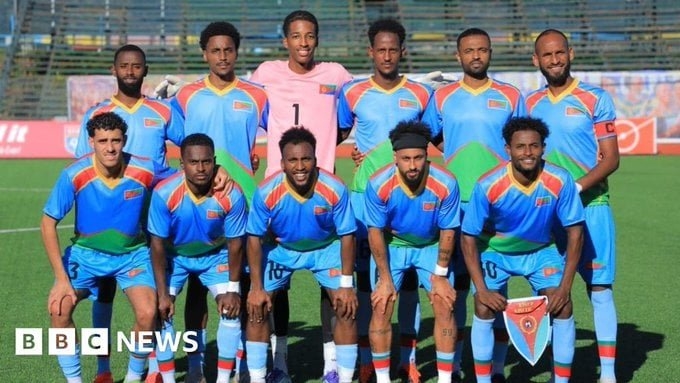
A major development has cast a cloud over Eritrea’s historic return to the qualifying stages of the Africa Cup of Nations. Just days after securing a monumental victory over Eswatini, seven members of the Eritrea national football team have failed to return home, sparking speculation and concern. According to reports, these players, including goalkeeper Kubrom Solomon and veteran winger Medhanie Redie, are believed to have absconded during their journey back from South Africa. The disappearance of the players has left the Eritrean Football Federation reeling, as state-owned media remain silent on the unfolding situation. Once viewed as a moment of triumph, the team’s historic achievement is now overshadowed by questions about the whereabouts of its absent members. Meanwhile, the impact of this incident echoes broader patterns of players vanishing after international competitions, prompting questions about the challenges faced by athletes from Eritrea. As the search for the missing players continues, the story has taken a dramatic turn, highlighting the complexities surrounding Eritrean athletes and their journeys abroad.
The decision to skip Eritrea follows a series of events that unfolded after their match against Eswatini. Sources close to the team revealed that while some members successfully returned to Asmara, others, including key players and staff, decided to remain out of the country. Among those still unaccounted for are high-profile players like Ablelom Teklezghi, a captain who is also a significant figure in the team. While no official reasons for their departure have been provided, reports suggest that a group of players may have briefly stopped in other countries, including South Africa, before dispersing. Eritrean media outlets, known for their tightly regulated coverage, have neither confirmed nor denied these reports, leading to uncertainty about the fate of the missing individuals.
This latest incident mirrors previous cases involving Eritrean athletes, where many have chosen not to return home following international competitions. In 2019, seven players from the Eritrean under-20 team disappeared after participating in a regional tournament in Uganda. Similarly, in 2015, 10 senior players refused to return after a World Cup qualifier in Botswana. Even further back, in 2013, 15 players and a team doctor sought asylum in Uganda, while nearly the entire team fled from a trip to Kenya in 2009. These recurring events have raised concerns about the broader predicaments of athletes from Eritrea, including issues related to freedom of movement, political constraints, and potential persecution.
The implications of this recent development are significant for both the Eritrean Football Federation and the national sports landscape. Plans for a celebratory reception in Asmara, which was originally scheduled to honor the team’s achievement, have been postponed. The cancellation underscores the magnitude of the players’ disappearance, as well as the challenges faced by the federation in managing this crisis. Some allege that the team’s victory over Eswatini, which marked their first qualification for the Africa Cup of Nations in nearly two decades, failed to alleviate underlying issues affecting the players.
The ongoing search for the missing players will likely influence how this story unfolds in the months ahead. As efforts continue to locate them, the extent of their reasons for staying abroad will come under scrutiny. While some reports suggest that they may be seeking political or personal safety in neighboring countries, others remain undecided on their long-term plans. This situation highlights not only the “great escape” narrative often associated with Eritrean athletes but also the systemic issues that drive them to seek refuge elsewhere.
For now, the focus remains on the seven missing players, whose absence has turned a moment of national celebration into a crisis for Eritrean football. The repercussions of this incident could reshape the country’s approach to sports diplomacy and player management. As authorities scramble to resolve the matter, the story serves as a poignant reminder of the complexities faced by athletes from Eritrea, as well as the potential impact of political and social factors on their decisions. Moving forward, it underscores the need for greater transparency and support systems to prevent similar occurrences in the future.


Leave a Comment