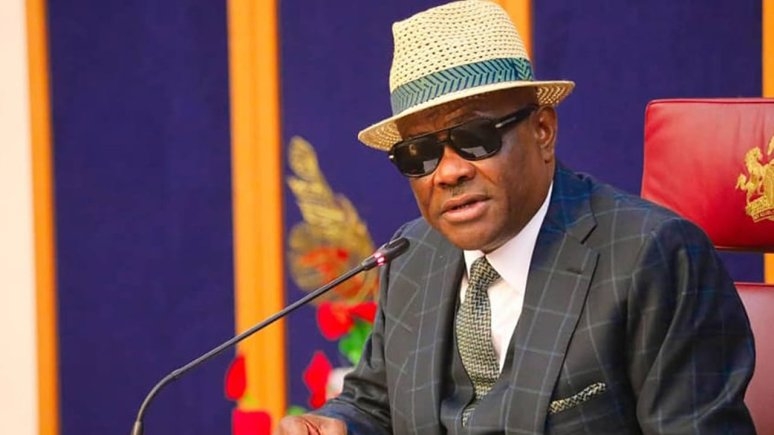
The Minister of the Federal Capital Territory, Nyesom Wike, has expressed confidence that hunger and insecurity will not deter Nigerians from re-electing President Bola Tinubu in the 2027 presidential election. Speaking during a media parley in Abuja on Wednesday, Wike emphasized that political dependence at various levels continues to shape voter behavior across Nigeria. He acknowledged the widespread challenges of hardship and insecurity but argued these factors have consistently been part of Nigerian elections without preventing voters from making choices based on loyalty and support networks.
Wike pointed out that every Nigerian election cycle has seen citizens voice concerns over food scarcity and safety, citing the period under former President Muhammadu Buhari as a similar example. “There is no election in Nigeria where the issue of hunger and insecurity won’t come up,” he stated, reinforcing the idea that such issues are perennial rather than unique to the current administration. Despite these ongoing difficulties, he believes voters’ decisions are influenced more by relationships with political leaders than by abstract ideals or policy evaluations.
He explained that many Nigerians rely on politicians for basic needs such as food, jobs, and other forms of assistance, especially at the family, community, local government, and ward levels. This dependency, according to Wike, makes Nigerian voters distinct from those in Western democracies where individuals often make independent political decisions based on ideology or party platforms. In Nigeria’s context, personal connections and patronage systems play a significant role in shaping electoral outcomes.
The former Rivers State governor urged critics to adopt a practical approach when analyzing voter behavior instead of relying on theoretical assumptions. He stressed that political loyalty and grassroots support structures remain powerful forces in determining election results. Even amid economic hardship, Wike maintained that Nigerians will still vote based on who they believe can deliver tangible benefits to their immediate communities.
His comments come at a time when inflation, unemployment, and rising crime rates continue to challenge public confidence in governance. However, Wike remains optimistic that the existing political dynamics will ensure continuity in leadership. As the 2027 election approaches, his remarks highlight the complex interplay between socio-economic conditions and electoral behavior in Nigeria. The upcoming election will likely test whether voters prioritize long-term solutions or short-term relief, but Wike’s perspective underscores the enduring influence of political patronage in Nigerian democracy.


Leave a Comment