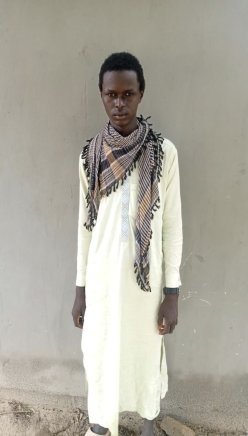
A 25-year-old suspected Islamic State West Africa Province (ISWAP) fighter has surrendered to Nigerian military personnel in Monguno Local Government Area of Borno State, marking a significant development in the ongoing counter-terrorism efforts in the Northeast. The surrender took place on Saturday, August 15, 2026, after the young man spent approximately eight months with the terrorist group. Identified as Ali Gambo Kanuri, he hails from Ngarinna village in Monguno LGA and was reportedly introduced to ISWAP by a friend who had already joined the extremist network.
According to security analyst Zagazola Makama, who cited military sources, Gambo’s time within the terrorist group led to growing disillusionment with its ideology and operations. He eventually decided to leave and make his way out of the militant-controlled zones. His decision to defect came after witnessing the harsh realities of life under ISWAP, including violence, strict discipline, and constant movement between remote locations. This internal shift in mindset ultimately prompted him to seek safety and rehabilitation through surrendering to Nigerian troops.
Gambo walked into Monguno town, where he voluntarily handed himself over to military officers stationed there. Upon capture, he was taken into custody for medical screening, psychological evaluation, and further processing. The military confirmed that he has been transferred to the appropriate authorities for handling in accordance with established protocols for individuals who disengage from terrorist organizations. These procedures include deradicalization programs, legal assessments, and potential reintegration into society, depending on individual circumstances.
The surrender highlights the increasing number of fighters choosing to abandon extremist groups amid sustained military pressure and humanitarian outreach initiatives. It also underscores the importance of community engagement and intelligence gathering in disrupting terrorist networks. Security experts believe such defections can provide valuable insights into enemy movements, tactics, and internal structures, aiding future operations.
Ali Gambo Kanuri’s case is one of many recent examples of youth disengaging from violent extremism in Nigeria’s Northeast. As the government continues to strengthen both military and civilian-led rehabilitation programs, cases like this offer hope for long-term peace and stability in conflict-affected regions. His journey from recruitment to surrender serves as a reminder of the human dimension behind the war on terrorism, and the potential for change even among those once aligned with radical ideologies.




Leave a Comment