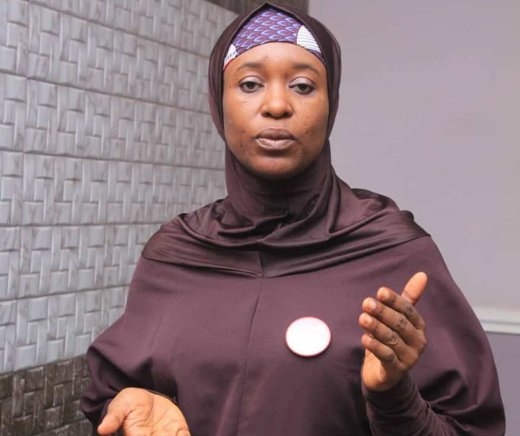
Human rights activist Aisha Yesufu has called for the Federal Capital Territory, FCT, Abuja, to be granted three senatorial seats, the same as every other state in Nigeria, citing its growing population and expansive land mass as justification. Speaking at a grassroots mobilization event, Yesufu emphasized that the FCT’s demographic and geographical significance warrants greater representation in the National Assembly. She argued that the territory is more populous than 10 Nigerian states and covers a larger land area than eight states, making the current single senatorial seat outdated and inadequate.
Yesufu stated that the FCT has moved beyond the phase of merely fighting for one senator and should now demand full representation. She believes that having three senators and at least six members in the House of Representatives would ensure that Abuja’s residents have a stronger voice in national decision-making. “With this, the good people of Abuja will have more representatives and their voice will be heard,” she said. “Instead of one person, you will have three persons speaking at the red chamber of the National Assembly for the FCT people.”
She further explained that this push for equitable representation is one of her key priorities if elected to the Senate. “This is one of the things I will push for as a Senator. It’s not going to be easy but it’s doable,” Yesufu affirmed. Her remarks come as she prepares for the 2027 general elections, during which she is running for the FCT senatorial seat. Her campaign has focused on governance, youth empowerment, and institutional reform, with this legislative representation issue forming a central plank.
The call for expanded representation for Abuja is not new, but Yesufu’s advocacy adds momentum to a long-standing debate about the FCT’s status within Nigeria’s federal structure. Critics of the current arrangement argue that the FCT’s unique role as the nation’s capital, combined with its rapid urbanization and population growth, demands a proportionate share of political power. Others point to the challenges of governance in a territory that is both administratively distinct and politically underrepresented.
As Nigeria continues to grapple with issues of equity and representation in its federal system, Yesufu’s campaign highlights the need for structural reforms that reflect the realities of modern governance. Her push for three senators for the FCT is likely to spark broader discussions on how Nigeria’s political framework can adapt to demographic and geographic changes. The 2027 elections may serve as a pivotal moment for this demand to gain national traction.




Leave a Comment