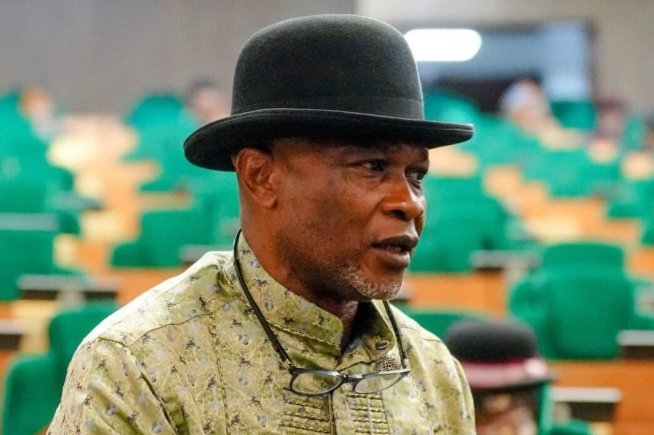
A chieftain of the African Democratic Congress (ADC), Chief Eze Chukwuemeka Eze, has challenged the All Progressives Congress (APC) to prove the legality of its Rivers State governorship candidate, Hon. Kingsley Chinda, following a landmark Supreme Court judgment on the Electoral Act, 2026. The court’s ruling on September 24, 2026, reaffirmed the legal requirement that political parties must use verified membership registers submitted to the Independent National Electoral Commission (INEC) for primaries and nominations. Eze emphasized that this decision is not a matter of political rivalry but a test of legal compliance in Nigeria’s electoral system.
The Supreme Court’s judgment upheld Sections 77(5), 77(6), 77(7), and 84(2) of the Electoral Act, which mandate that only members whose names appear in the official party register submitted to INEC can participate in party primaries. Section 77(5) specifically requires that such participation be based solely on the registered membership list, while Section 77(6) prohibits the use of any alternative register. Section 77(7) further outlines penalties for non-compliance, reinforcing the seriousness of these statutory obligations.
Eze stressed that the APC cannot rely on mere declarations to validate Chinda’s nomination. He questioned whether Chinda’s name was indeed in the APC’s verified membership register submitted to INEC within the prescribed timeframe and whether all other legal requirements were met. “The Supreme Court has spoken,” he said. “What remains is compliance. The APC cannot substitute political assertions for documentary evidence.”
He pointed out that Section 177(c) of the Nigerian Constitution mandates that gubernatorial candidates must be sponsored by a political party, and that sponsorship must be established through proper party records. Eze argued that the Supreme Court’s latest pronouncement underscores a fundamental principle: no political party is above the law. He warned against allowing political expediency to override statutory processes, especially in Rivers State, where past disputes over primaries have led to legal battles with serious consequences.
Eze called on INEC to rigorously scrutinize the APC’s nomination process in Rivers State, demanding transparency in the submission and verification of membership registers. He insisted that if the documents do not satisfy the law, the appropriate legal consequences must follow. “There should be no special exemption for APC, PDP, ADC or any other political party,” he stated.
He also addressed the broader political context, noting the historical challenges faced by APC in Rivers State, particularly due to actions linked to FCT Minister Nyesom Wike. While acknowledging past grievances, Eze urged political actors to resolve disputes through legal means rather than retaliation. “Justice should not be administered by vengeance,” he said, “but by the law of consequences.”
Eze expressed disappointment that a seasoned politician like Chinda is now at the center of a legal controversy, stressing that public office must be pursued with respect for constitutional and electoral laws. He criticized attempts to reduce Rivers State’s politics to ethnic or senatorial contests, emphasizing that the state belongs to all its people — Ijaw, Ikwerre, Ogoni, Kalabari, Etche, Okrika, Opobo-Nkoro, Bonny, Andoni, Eleme, and others.
He condemned efforts to make political leadership an exclusive preserve of certain individuals or networks, reminding everyone that Rivers State is not a private estate. Political power, he said, must be contested on the basis of law, competence, legitimacy, and the will of the electorate.
Eze also criticized the Federal Government’s 2025 declaration of emergency in Rivers State, saying it should prompt stronger constitutional safeguards. He urged INEC, political parties, and all stakeholders to uphold the integrity of the 2027 elections, ensuring that legal processes precede political power. “The lesson is clear: nobody is bigger than the law,” he concluded. “Rivers State deserves an election where the Constitution stands above political interests, and the people retain their sovereign authority.”





Leave a Comment