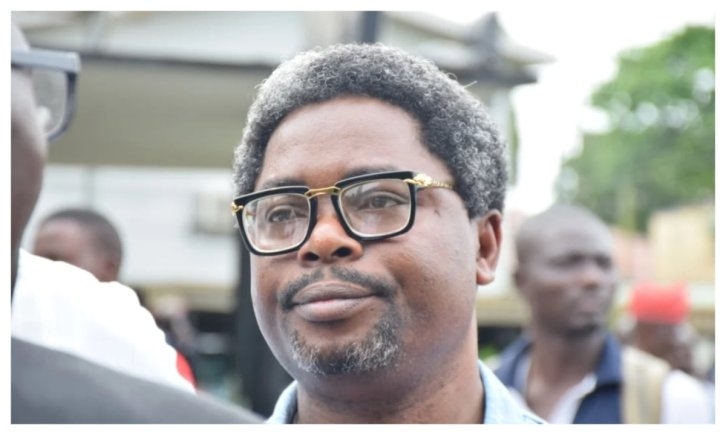
Lere Olayinka, a senior aide to the Minister of the Federal Capital Territory, Nyesom Wike, has firmly rejected allegations that Peter Obi, presidential candidate of the Nigeria Democratic Congress (NDC), avoids spending money on political campaigns. Speaking on AIT’s Democracy Today, Olayinka emphasized that politics in Nigeria is fundamentally a business and that campaign financing is a normal part of electoral competition. He cited his own experience as a delegate during the 2023 elections in Ekiti State, where he said Obi personally distributed funds to party delegates while still a member of the Peoples Democratic Party (PDP).
Olayinka stressed that denying campaign expenditures is misleading, especially when politicians across parties routinely spend money to secure votes and influence outcomes. “As a politician or a businessman, if your competitor wins, what happens to you? You lose out,” he stated. He compared electoral contests to business contracts, arguing that success in either arena requires investment and strategic spending. His remarks were aimed at countering narratives portraying Obi as an exception to the norm in Nigerian politics.
He further pointed out that even in primary elections, candidates often distribute money to secure support from party members. “In your party primaries, you give people money,” Olayinka said, referring to practices common in Nigeria’s political landscape. He challenged those making claims about Obi’s campaign spending to be honest with themselves and the public, warning against deceptive narratives. According to him, the idea that Obi does not give “shishi” — a colloquial term for campaign cash — is simply false.
The aide recalled specific instances during the 2023 election cycle when Obi visited Ekiti State and handed out money to delegates before his eventual move to the Labour Party. This, he insisted, proves that Obi participates fully in the financial dynamics of Nigerian politics. Olayinka’s comments come amid heightened scrutiny of campaign financing ahead of upcoming elections, with various parties and candidates under pressure to justify their spending.
By highlighting real-world examples and framing politics as both service and business, Olayinka sought to normalize campaign spending while defending Obi’s conduct. His appearance on national television underscores the ongoing debate over transparency and ethics in Nigeria’s electoral process. As the country prepares for future elections, such discussions will likely remain central to public discourse on political accountability.

Leave a Comment