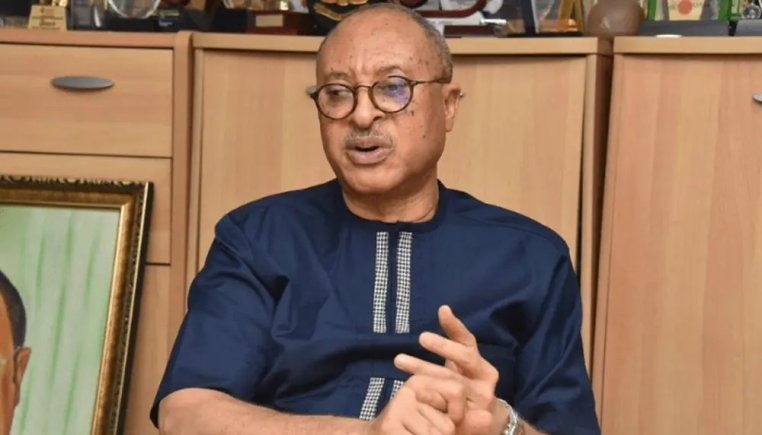
Professor Pat Utomi, a renowned Nigerian academic and Professor of Political Economy, has weighed in on the recently concluded Osun State governorship election, declaring it a powerful demonstration that voters can overcome electoral rigging. In a statement shared on his verified X (formerly Twitter) account on Sunday, Utomi praised the resilience and determination of Osun electorate, asserting that their participation and vigilance played a crucial role in ensuring a credible outcome despite widespread concerns about possible manipulation.
Utomi’s remarks come amid heightened scrutiny of Nigeria’s electoral processes, especially following the 2023 general elections which were marred by allegations of irregularities and vote tampering. The Osun election, held on July 14, 2024, saw incumbent Governor Ademola Adeleke of the Peoples Democratic Party (PDP) defeat his closest rival, Gboyega Oyetola of the All Progressives Congress (APC), by a margin of over 60,000 votes according to the Independent National Electoral Commission (INEC). The result was declared after a tense counting process and numerous legal challenges, including claims of ballot box snatching and voter suppression.
The political economist emphasized that the high voter turnout and sustained public pressure during the election period acted as a deterrent against large-scale fraud. “This election proves that when citizens are awake and engaged, they can beat rigging,” Utomi stated. He highlighted how social media platforms, civil society groups, and independent observers contributed to real-time monitoring, exposing anomalies and demanding accountability from electoral officials.
Utomi also acknowledged the role of INEC’s improved technology, particularly the use of Bimodal Voter Accreditation System (BVAS) machines and results transmission protocols, in enhancing transparency. While he noted that some isolated incidents of misconduct occurred, he stressed that the overall integrity of the process was maintained through collective citizen action. “The people of Osun did not allow themselves to be cheated,” he added.
His comments have sparked discussions across Nigerian political circles, with many viewing the Osun poll as a potential model for future elections. Analysts suggest that the outcome could influence voter behavior and party strategies ahead of the 2027 general elections. As Nigeria continues to navigate its democratic journey, Utomi’s observation underscores the growing power of an informed and mobilized electorate in shaping electoral outcomes.
The Osun governorship election is now being closely studied by electoral reform advocates and political stakeholders nationwide, offering lessons on civic engagement, technological oversight, and the importance of sustained public vigilance. This development signals a hopeful shift toward more transparent and participatory democracy in Nigeria.
Leave a Comment