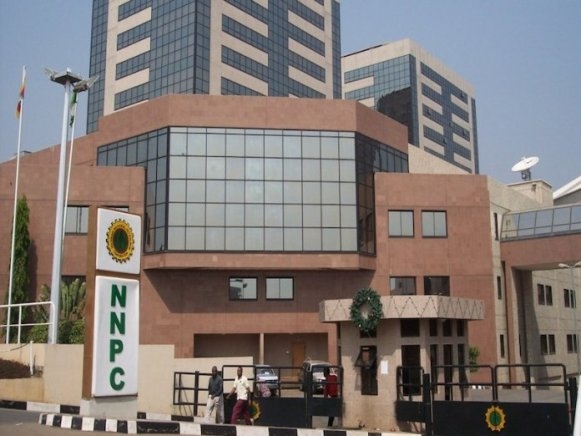
The Nigerian National Petroleum Company Limited (NNPC) has announced it will not commit further resources to the rehabilitation of its three state-owned refineries—Port Harcourt, Warri, and Kaduna—until a credible, commercially sustainable model is established. This marks a significant shift in strategy, moving away from past practices where NNPC bore the full financial burden of repairs and operations without guaranteed returns. Group Chief Executive Officer Bayo Ojulari emphasized that future investments must be tied to profitability, operational sustainability, and shared financial responsibility with technical partners.
Under the new approach, NNPC seeks technical equity partners who will invest capital alongside the national oil company and share directly in the commercial performance of the refineries. This contrasts sharply with previous arrangements where contractors were paid to carry out rehabilitation work with minimal long-term financial exposure. Ojulari stated that continuing to spend without a clear path to sustainable returns would simply repeat the failures of earlier rehabilitation efforts. The company now insists that any future spending must support refineries capable of generating revenue internally and competing effectively with other refiners in the market.
A key change is the discontinuation of using crude oil to finance refinery repairs. NNPC stopped this practice last year after determining it consumed valuable resources without yielding sufficient economic benefits. This decision contributed to improved financial performance in 2025, with profit after tax rising 33% to N7.2 trillion from N5.4 trillion in 2024. Despite a 24% drop in revenue to N34.5 trillion, operating cash flow increased by 16% to N12.8 trillion, and EBITDA rose 22% to N18 trillion. The company also declared a record dividend of N5.8 trillion, up 35% from the previous year.
NNPC is currently exploring technical equity partnerships for the Port Harcourt and Warri refineries. In May, it signed a memorandum of understanding with China’s Sanjiang Chemical Company Limited and Xinganchen (Fuzhou) Industrial Park Operation and Management Co. Ltd. The partnership covers rehabilitation, operation, maintenance, potential expansion, and development of petrochemical and gas-based industrial capacity. These Chinese firms were selected from over 50 initial candidates, narrowed down to about 20 after an evaluation process. Technical teams have since conducted a three-month assessment to determine the condition of the facilities and estimate required investment.
The findings have prompted NNPC to reconsider some older rehabilitation plans, as proceeding with them could leave the refineries technologically outdated. The company is now evaluating newer technologies, process optimisation, and petrochemical integration to build a competitive business model. However, no final agreement has been reached yet. The current MOU allows the Chinese partners to complete assessments and submit proposals, followed by commercial and technical negotiations. Kaduna refinery remains at an earlier stage of engagement. For NNPC, the central condition remains clear: additional funding will only proceed if the refineries can operate as self-sustaining, profitable enterprises with direct financial exposure for investors. This strategic pivot signals a long-term commitment to transforming Nigeria’s refining sector into a viable, commercially driven industry.



Leave a Comment