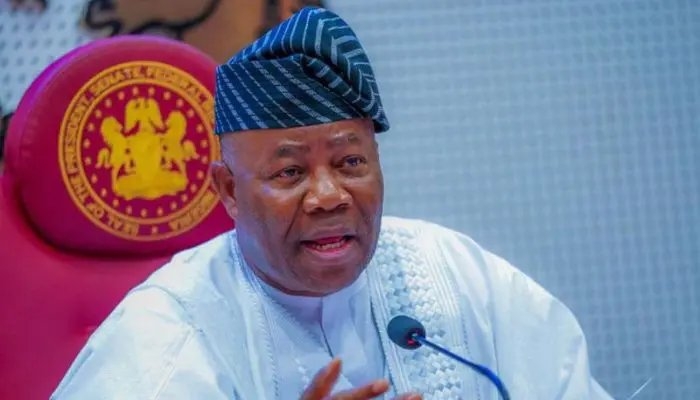
Nigerian Senate President Godswill Akpabio has predicted that the country’s worsening security situation will improve within two weeks after the forthcoming general elections, attributing the current instability to political opposition and orchestrated violence. Speaking at the official launch of the Nigerian Revenue Service Corporate Headquarters in Abuja on Tuesday, Akpabio stated that insecurity is being deliberately fueled by those who oppose President Bola Tinubu’s administration. He emphasized that the surge in violence is directly linked to the election season, as political opponents, unable to challenge the president’s performance, resort to instigating unrest.
Akpabio’s remarks come amid rising concerns over security across Nigeria, with recent incidents involving the loss of military personnel and soldiers in various parts of the country. He argued that the current wave of insecurity is not organic but sponsored by individuals and groups with vested interests in destabilizing the nation. “Insecurity is increasing because elections are coming, because people don’t know what to do again,” he said. He added that once the elections are over, the situation will normalize within a fortnight, as the motive for violence will no longer exist.
The Senate President’s comments follow President Tinubu’s closed-door meeting with service chiefs and the Inspector General of Police on Monday, where urgent security matters were discussed. The meeting underscores the government’s growing concern over the escalating threats to national stability, including attacks on military installations and increased banditry in the North-West and North-East regions. The recent deaths of several military commanders and soldiers have heightened alarm, prompting calls for stronger measures to protect security personnel and restore peace.
While Akpabio’s statement offers a timeline for security improvement, it has also sparked debate about the root causes of insecurity in Nigeria. Critics argue that blaming political opposition for violence overlooks systemic issues such as underfunding of security agencies, poor intelligence gathering, and widespread poverty that fuel criminal activities. Others point to the need for sustained reforms and improved coordination among security agencies, rather than relying on election timelines for stability.
Despite the Senate President’s optimistic outlook, the reality on the ground remains challenging. The Nigerian government continues to grapple with multiple security threats, including terrorism, kidnapping, and farmer-herder conflicts. The upcoming elections, scheduled for February 2027, are expected to be a critical period for national security. As the country prepares for this pivotal moment, all eyes are on how the government will address the underlying causes of insecurity and ensure a peaceful electoral process.


Leave a Comment