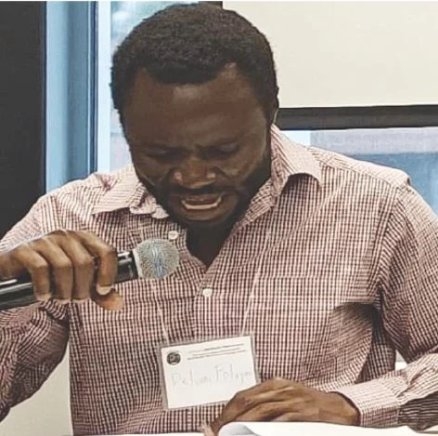
Nigerian lecturer Pelumi Folajimi has presented his unpublished drama manuscript, Terrorists Upon Us, at the University of Tennessee, Knoxville, in the United States, drawing attention to the ongoing security challenges in Nigeria. The staged reading took place last Friday at the Students’ Union Building, where Folajimi shared his powerful narrative with an audience of academics and cultural scholars. The play, written during the summer of 2024, directly addresses the violent activities of the Boko Haram terrorist group and explores the deeper societal issues that fuel such extremism.
Folajimi, a lecturer in Dramatic Arts at Obafemi Awolowo University, Ile-Ife, crafted the play to highlight critical factors contributing to Nigeria’s insecurity. He emphasized that religious extremism, internal terrorism, political corruption, and leadership failure are central themes in the work. Through dramatic storytelling, he seeks to provoke reflection and dialogue on how these interconnected issues have weakened national stability and affected ordinary citizens.
The event attracted prominent scholars from across North America, including Emeritus Professor Ketu Katrak from the University of California, Irvine, and Emeritus Professor Dorothy Odartey-Wellington from the University of Guelph, Canada. Also in attendance were Professor Modupe Olaogun of York University, Canada, and Dr. Joy Wrolson from the University of Wisconsin–Madison. Their presence underscored the international relevance of Folajimi’s work and the growing interest in Nigerian narratives within global academic circles.
Folajimi was in the United States on a visit when he presented the reading, showcasing Nigeria’s cultural and intellectual contributions on an international stage. His performance was not only a literary event but also a form of advocacy, using theatre as a tool to confront real-world challenges. The play’s themes resonate deeply with current events in Nigeria, where insecurity remains a top concern for citizens and policymakers alike.
By bringing Terrorists Upon Us to a U.S. university, Folajimi has amplified Nigerian voices in discussions about peace, governance, and social justice. The reception of his work by international academics suggests a growing recognition of Nigeria’s complex realities and the power of storytelling to influence change. As Nigeria continues to grapple with security threats, Folajimi’s play stands as a timely reminder of the need for accountability, reform, and unity. This presentation marks a significant moment in Nigerian drama and signals the potential for more such works to reach global audiences in the future.



Leave a Comment