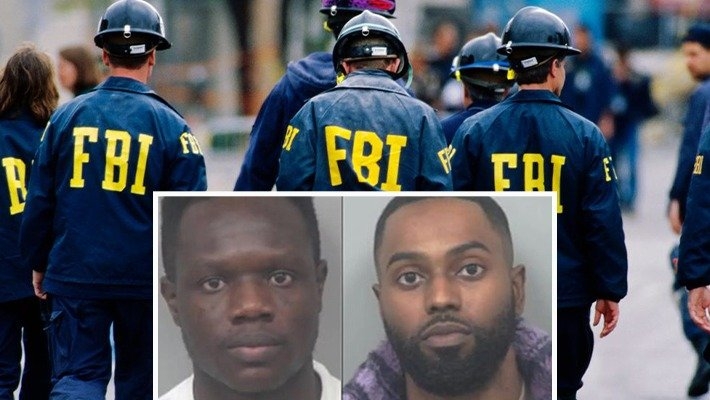
Ten Nigerian nationals have been convicted in the United States for their roles in transnational internet fraud syndicates that defrauded victims globally of $125 million. The group, which includes Oluwafemi Michael Awoyemi, Ayobami Osas Christopher, Emmanuel ‘Omo Igbo’ Okereke, Olalekan ‘Ola Bash’ Bashiru, Casey Adesulu Jr, Jeremiah Agina, Ademola Balogun, Olabode Bankole, Chukwuemeka Evulukwu, and Ayorinde Emmanuel Adebayo, was part of a larger network of 25 defendants convicted after a four-day trial at the United States District Court for the Northern District of Ohio. The trial concluded on Thursday, with three defendants opting for jury trials while the rest pleaded guilty.
The U.S. attorney’s office revealed that the fraudsters targeted individuals, businesses, and organizations across the United States and internationally through sophisticated cyberattacks. Their primary method involved hacking into email accounts to gain access to sensitive information, which they then used to send convincing phishing emails. These fraudulent messages often appeared to come from trusted contacts and requested payments for fake business transactions. The criminals monitored victims’ communications to understand their business practices and relationships, enabling them to craft highly personalized scams.
Victims were not limited to the U.S. The scheme targeted individuals and companies in countries including Canada, Mexico, Great Britain, Germany, Italy, Kuwait, the United Arab Emirates, Australia, New Zealand, Malaysia, Panama, Bermuda, and Romania. Once funds were transferred, the gang used a network of fraudulent bank accounts and cash transfer systems to launder and distribute the money. Prosecutors noted that approximately $50 million of the illicit proceeds were used to buy cashier’s checks, which were presented to New Dolton Currency Exchange in Chicago, a business owned by co-defendant Lon Goodman.
New Dolton Currency Exchange played a central role in rerouting funds to shell companies controlled by the gang members. Despite repeated warnings from banks that the checks were fraudulent or linked to stolen funds, the operation continued. In one case, a victim business sent $2.7 million to a shell company account controlled by a conspiracy member. The FBI seized nearly $1.2 million in cash, cashier’s checks, and cryptocurrency from the defendants during their arrest.
Luxury items were also confiscated, including a Patek Philippe Nautilus watch valued at $45,000, an Audemars Piguet Royal Oak watch worth $30,000, a Richard Mille Felipe Massa watch priced at $140,000, and a 4,423-square-foot residence in Lawrenceville, Georgia. The defendants are set to be sentenced at a later date, with penalties based on individual factors such as prior criminal history, role in the crime, and the nature of their violations. This conviction underscores the global reach of cybercrime and the U.S. government’s commitment to holding perpetrators accountable, regardless of nationality.



Leave a Comment