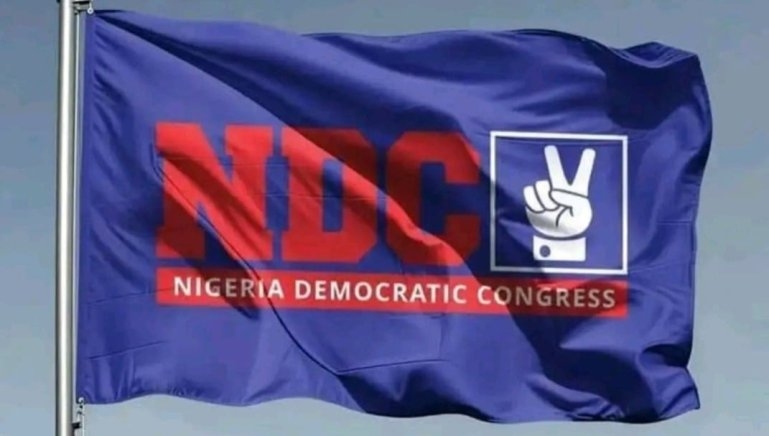
The National Democratic Congress (NDC) is grappling with deepening internal divisions following its nationwide primary elections held on May 29, 2024, ahead of the 2027 general elections. Despite the National Executive Committee ratifying the results a week later, the official candidate list remains unpublished, sparking widespread speculation, mistrust, and open conflict among party members across Nigeria. The crisis has particularly intensified in Kano State, where a power struggle between the Kwankwasiya Movement and legacy NDC officials has erupted over allegations that supporters of former Kano Governor Rabiu Musa Kwankwaso manipulated the nomination process. Unofficial candidate lists circulating on social media have further fueled tensions, with many party stakeholders accusing influential figures of attempting to influence outcomes behind closed doors.
In the South-East, members of the Obidient Movement have voiced grievances over what they describe as the maltreatment of aspirants, including being deceived into paying millions of Naira for nomination forms, contrary to party directives. The NDC, through its spokesperson Osas Director, has dismissed these lists as unofficial and urged members to ignore them. Director confirmed that a reconciliation meeting involving Kwankwasiya leaders and long-standing NDC officials in Kano was facilitated by National Leader Senator Seriake Dickson to promote inclusion and internal democracy. He emphasized that the party would not impose candidates anywhere, reiterating its commitment to transparency and democratic processes.
However, tensions persist, with reports that Kwankwaso has threatened to leave the party after allegations that he is trying to dominate the Kano chapter. A power-sharing agreement brokered by Dickson allocated 60% of the party structure in Kano to the Kwankwasiya Movement and 40% to existing leaders, but state officials claim this was disregarded during nominations. Kano State Chairman Hussaini Isa Mariga and North-West Vice Chairman Mohammed Rabiu Serina accused Kwankwaso’s loyalists of monopolizing nomination forms, leading to a revised candidate list that Kwankwaso rejected. Meanwhile, in Enugu, youths from Nsukka Local Government stormed the NDC headquarters, demanding transparency and warning against candidate imposition.
Stakeholders, including co-convener Uche Uzomba, have demanded accountability, warning that prolonged silence could damage public confidence in the party. A senior South-East official, speaking anonymously, accused powerful interests of forming a “selection committee” to replace primary winners, calling it a betrayal of democracy. He warned that such actions could trigger legal battles and destroy the party’s credibility. The crisis has also spilled into a public feud between NDC presidential candidate Peter Obi and his former ally Kenneth Okonkwo, who alleged that Obi and South-East leaders collected bribes from aspirants. Obi has denied the claims and filed a lawsuit against Okonkwo, calling the allegations false and malicious.
Senator Dickson has sought to calm tensions, stating that discussions with Kwankwaso focused on unity and integration of support groups like the Kwankwasiya and Obidient Movements into party structures. Political analyst Sam Amadi noted that the NDC’s rapid growth has exposed structural weaknesses, criticizing the party for lacking a clear strategy for conducting primaries. He warned that without strategic vision, the party risks losing its momentum. National Director of the Obidient Movement, Yunusa Tanko, acknowledged that challenges are inevitable for a growing party but declined to comment on the primaries, directing inquiries to the party’s official spokesperson. As the NDC navigates this turbulent period, its ability to resolve internal conflicts will be crucial in determining its viability as a credible opposition force in the 2027 elections.

Leave a Comment