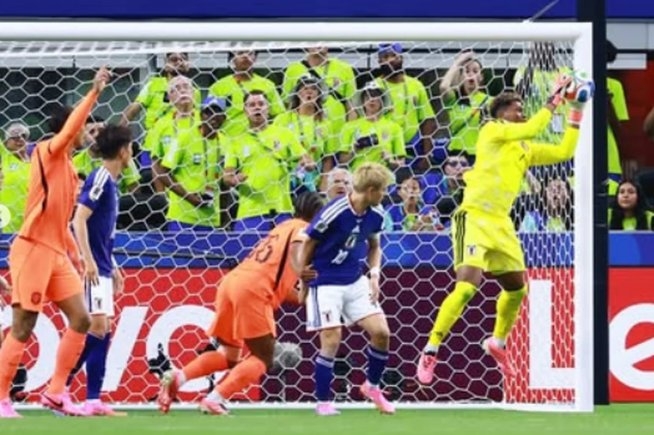
Speaking on SuperSport as monitored by allnigeriasoccer.com, Akpeyi emphasized the significance of Suzuki’s selection over more experienced goalkeepers in the squad. “I want to give credit to the goalkeeper,” Akpeyi said. “This tells why he was chosen in goal ahead of the older ones on the bench because he has been able to concentrate on the game.” He further praised Suzuki’s ability to anticipate danger and react swiftly, which helped Japan remain competitive despite being under pressure for much of the match.
The result leaves Japan in second place in Group F, behind leaders Sweden, with a strong chance of advancing to the knockout stages. Suzuki’s performance has already drawn comparisons to other standout goalkeepers at the tournament, and his confidence and maturity for his age have sparked optimism among Japanese fans and analysts alike. His ability to handle high-pressure situations could prove decisive in Japan’s remaining group matches against Costa Rica and Germany.
Akpeyi’s analysis underscores the growing recognition of Suzuki as a rising star in international football. His display not only secured a point for Japan but also demonstrated the value of youth and preparation in modern goalkeeping. As the tournament progresses, Suzuki’s role will remain critical, and his performance against the Netherlands may well be remembered as a turning point in Japan’s World Cup campaign.





Leave a Comment