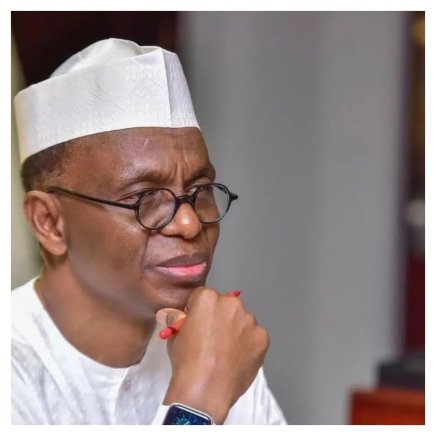
The African Democratic Congress (ADC) presidential candidate, Atiku Abubakar, has condemned the ongoing detention of former Kaduna State Governor Nasir El-Rufai, calling it a blatant violation of justice and due process. As of 4 September 2026, El-Rufai has spent 200 consecutive days in custody under the supervision of the Independent Corrupt Practices and Other Related Offences Commission (ICPC). Atiku’s media aide, Paul Ibe, issued a strong statement asserting that El-Rufai is entitled to fair treatment under Nigerian law and is being unfairly targeted for choosing a different political path.
Ibe described El-Rufai as a political prisoner, arguing that his prolonged detention stems not from any proven wrongdoing but from his decision to leave the All Progressives Congress (APC) and pursue an alternative political future. He emphasized that Nigeria’s Constitution guarantees citizens the right to change political affiliations without fear of reprisal. The ADC camp questioned why state institutions appear to act with disproportionate force against opposition figures while turning a blind eye to similar cases involving ruling party politicians.
A key example cited was former Kogi State Governor Yahaya Bello, who remains politically active despite facing ongoing prosecution by the Economic and Financial Crimes Commission (EFCC). Bello has even secured the APC senatorial ticket, raising concerns about double standards in how legal processes are applied across political lines. “Nobody should be above the law,” Ibe stressed, yet the disparity in treatment between El-Rufai and Bello highlights growing perceptions of bias.
The statement warned that state agencies—including the police, EFCC, ICPC, and parts of the judiciary—are increasingly being used as tools to suppress political dissent ahead of the 2027 general elections. It accused these institutions of becoming “Emilokanised,” a reference to the controversial actions of former Inspector General of Police Mohammed Adamu, implying they are being weaponized against opponents. This pattern, according to the ADC, undermines democratic principles and erodes public trust in Nigeria’s institutions.
Atiku’s team urged President Bola Tinubu to earn re-election through legitimate campaigning rather than intimidating opposition leaders. They insisted that democracy must allow for free and competitive elections, where candidates are defeated at the ballot box—not silenced through detention or endless litigation. “If state power is used to clear the political field before Nigerians get to vote, then the greatest casualty will not be the opposition. It will be Nigerian democracy,” the statement concluded. The situation underscores mounting concerns about the health of Nigeria’s democratic space as the next election cycle approaches.



Leave a Comment