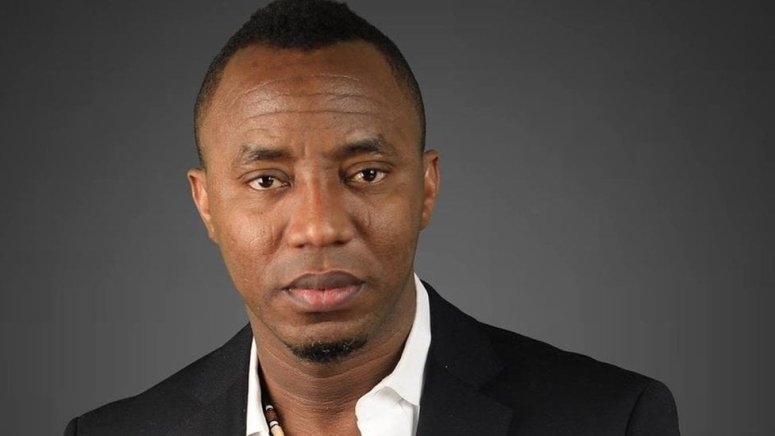
Omoyele Sowore, the 2027 presidential candidate of the African Action Congress (AAC), has launched a sharp critique of Nigerian politicians who rely on godfathers, billionaire backers, and pre-existing political parties to advance their ambitions. In a recent social media post, Sowore defended the AAC, emphasizing that the party was founded and sustained through the courage, sacrifice, and grassroots support of ordinary Nigerians. He questioned why many aspiring leaders continue to shift between political parties during election seasons instead of building their own movements from the ground up.
Sowore argued that if politicians truly believe in their ideas and platforms, they should prove it by mobilizing Nigerians without depending on wealthy patrons or established political structures. He pointed out that moving from one party to another undermines genuine political development and reflects a lack of commitment to building sustainable institutions. “If their ideas are so compelling, let them organize. If their platforms are so popular, let them mobilize. If their politics is so powerful, let them build,” he stated emphatically.
He criticized those who attempt to convince their supporters to abandon the political platforms they helped create in favor of joining other parties. According to Sowore, this behavior reveals a deeper problem: a reliance on patronage rather than public trust and ideological conviction. The AAC, he insisted, stands in contrast to such practices, having been built not for personal gain but through collective effort and dedication.
“We built ours with our sweat and blood. Let them build theirs,” Sowore added, reinforcing his message of self-reliance and grassroots empowerment. His remarks highlight a growing call for authentic political engagement in Nigeria, where many see party switching and godfatherism as obstacles to meaningful democratic progress.
The AAC, though relatively new compared to Nigeria’s dominant political parties, has positioned itself as an alternative rooted in civic activism and national renewal. Sowore’s campaign emphasizes transparency, accountability, and the power of ordinary citizens to shape the country’s future. As Nigeria prepares for the 2027 general elections, his message resonates with a segment of voters frustrated with the status quo and seeking change.
His critique serves as both a challenge and an invitation — challenging incumbents and aspirants to prove their credibility through action, and inviting Nigerians to join a movement built on principle rather than patronage. With the political landscape evolving, Sowore’s words may signal a shift toward more independent and ideologically driven campaigns in the years ahead.



Leave a Comment