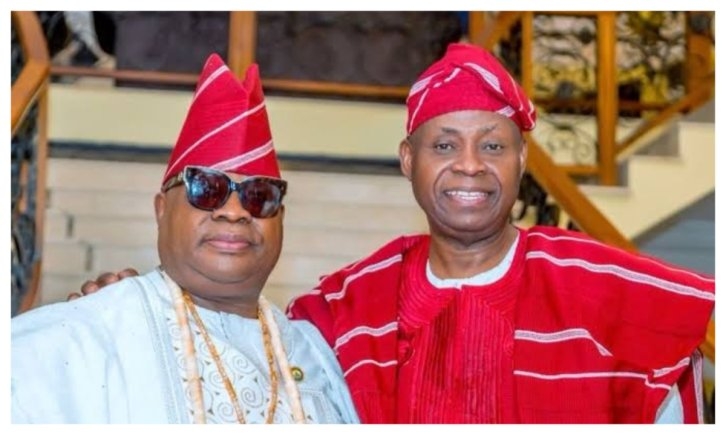
Deji Adeleke, a prominent Nigerian businessman and father of afrobeats star Davido, has accused the All Progressives Congress (APC) of spending approximately N60 billion on vote-buying during the 2022 Osun State governorship election. In his allegations, Adeleke stated that the APC distributed N50,000 to individual voters in certain areas to influence their choices at the polls. The claims have sparked widespread debate and raised serious concerns about electoral integrity in Nigeria’s democratic process.
Adeleke made these revelations in an interview, where he emphasized the scale and systematic nature of what he described as a coordinated effort to manipulate the outcome of the election. He argued that such financial inducements undermined the credibility of the electoral system and eroded public trust in democratic institutions. According to him, the APC’s alleged spending was not limited to small-scale bribes but involved large sums funneled through various channels to sway voters across multiple wards and local government areas.
The Osun State governorship election, held on July 16, 2022, saw Ademola Adeleke of the Peoples Democratic Party (PDP) emerge victorious over Gbadebo Rhodes-Vivour of the Labour Party and Senator Ademola Adeleke’s rival, Isiaka Olajide of the APC. The APC had contested the results, alleging irregularities, but the Independent National Electoral Commission (INEC) upheld the outcome after a series of legal challenges. Adeleke’s latest claims add another layer to the ongoing discourse around electoral fairness in Nigeria.
While the APC has not officially responded to Adeleke’s specific allegations, political analysts note that vote-buying remains a persistent challenge in Nigerian elections. Previous investigations by media organizations and civil society groups have uncovered instances of cash distribution, food packages, and other incentives offered to voters ahead of critical elections. These practices often target rural and economically vulnerable communities, where access to information and alternative livelihoods may be limited.
Adeleke’s statement comes amid growing calls for stricter enforcement of electoral laws and greater transparency in campaign financing. Civil society organizations have urged INEC and the Economic and Financial Crimes Commission (EFCC) to investigate such claims thoroughly and hold accountable those found guilty of electoral malpractice. The public’s demand for accountability is stronger than ever, especially as Nigeria prepares for future elections, including the 2027 general elections.
As the nation continues to grapple with issues of governance and democracy, Adeleke’s revelations serve as a stark reminder of the need for reforms in how elections are conducted and monitored. His voice, amplified by his high-profile status, may prompt renewed scrutiny into the funding and conduct of political campaigns across Nigeria.
Leave a Comment