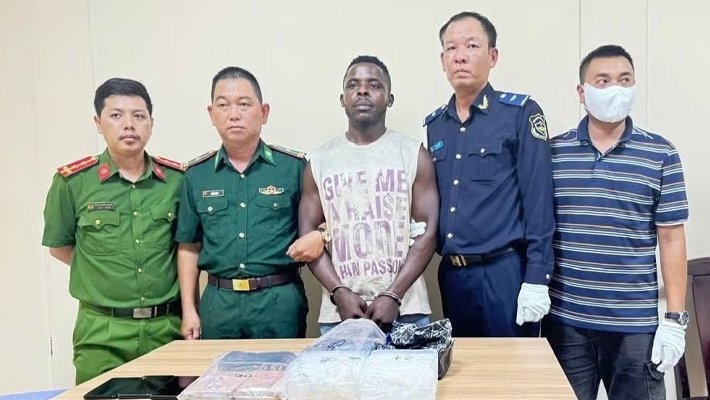
A Nigerian national, Izuchukwu Calistus Odionye, has been arrested in Vietnam for his involvement in a major drug trafficking operation that involved smuggling narcotics from Laos into the country. The arrest took place on August 9 in Ho Chi Minh City, where authorities intercepted Odionye while he was receiving a package containing illegal drugs. Born in 1983, the suspect admitted to being hired to collect the consignment and transport it to Hanoi, according to VietnamPlus, which reported the incident on Monday.
The case was uncovered by customs officials at the Lao Bao International Border Gate in Quang Tri province, a key crossing point between Laos and Vietnam. Investigators tracked the movement of the drug shipment across multiple locations before making the arrest. Law enforcement officers from the Customs Sub-Department of Region IX played a central role in the operation, demonstrating heightened vigilance along the border region.
Odionye’s admission during questioning confirmed his direct participation in the trafficking network. He stated that he had been paid to receive the drugs in Ho Chi Minh City and deliver them further north. Authorities have since expanded their investigation to identify other individuals who may be connected to the smuggling ring. This development highlights the ongoing challenges Vietnam faces in combating cross-border drug trafficking, particularly through its northern borders with Laos.
The Vietnamese government has consistently cracked down on drug-related crimes, especially those involving foreign nationals. The arrest of a Nigerian citizen underscores the global nature of such illicit activities and the increasing presence of international actors in regional drug networks. Nigeria, like many African countries, has seen a rise in citizens being recruited or lured into transnational crime, often under false promises of employment or financial gain.
This incident adds to a growing list of Nigerian nationals apprehended abroad for drug-related offenses. In recent years, similar cases have been reported in countries such as Ghana, South Africa, and various parts of Europe and Asia. These arrests often prompt calls for stronger international cooperation and better public awareness campaigns in Nigeria to deter youth from engaging in criminal enterprises abroad.
As the investigation continues, Vietnamese authorities are expected to share information with Nigerian law enforcement agencies to ensure full accountability. The case also serves as a warning to Nigerians about the dangers and legal consequences of participating in illegal activities overseas. With increased scrutiny on cross-border movements, those involved in drug trafficking face not only local penalties but also potential extradition and prosecution in their home countries.


Leave a Comment