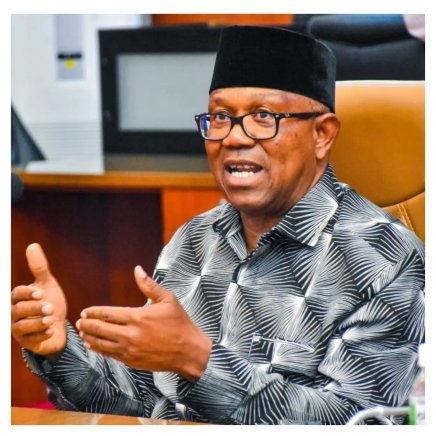
Peter Obi, the 2027 Nigeria Democratic Congress (NDC) presidential candidate, has revealed why he may not contest for the presidency again in 2031, citing age and the country’s political zoning formula as key factors. In a recent interview with media personality Rufai Oseni, Obi stated that if the presidency goes to the North in 2031, he will be 78 years old by the time power returns to the South, making another run unlikely. He emphasized that while the possibility is “very slim,” his decision would ultimately depend on the outcome of the 2027 election and the prevailing political arrangement.
Obi, who served as governor of Anambra State, spoke candidly about the question of future presidential aspirations. When asked if he would run again should he lose in 2027, he responded cautiously, saying, “For me, it depends on what happens. I don’t want to say it because people might think that I’m saying it because of some people.” He recounted a personal moment when a secondary school student asked him directly if he would run again after 2027. Obi replied, “No,” and explained his reasoning: if he doesn’t win this time, the next presidential cycle under the zoning formula would likely go to the North, and by the time it returns to the South, he would be 78.
The zoning arrangement, which alternates presidential power between the North and South, has long influenced Nigeria’s political landscape. Obi acknowledged this system as a major determinant in his future plans. He noted that if the presidency remains in the South after 2027, he might consider running again in 2031, though he stressed that the probability remains low. “If it’s still in the South in the next election, maybe, but the probability is very slim,” he said, adding that he would wait to see the outcome of the 2027 election before making any firm decisions.
Obi’s comments reflect the realities of Nigeria’s political age dynamics and the structural constraints imposed by zoning. At 66 years old, he is already one of the older candidates in the 2027 race, and the prospect of another presidential bid at 78 raises questions about physical and political viability. His remarks also highlight the influence of youth and public engagement in shaping political discourse, as seen in the interaction with the secondary school student.
As Nigeria prepares for the 2027 elections, Obi’s potential exit from the presidential race in 2031 could signal a generational shift in leadership. His current campaign, therefore, carries added weight, not just as a bid for power, but as a possible final chapter in his political journey. The 2027 election may thus become a defining moment for Obi and for Nigeria’s evolving political landscape.
Leave a Comment