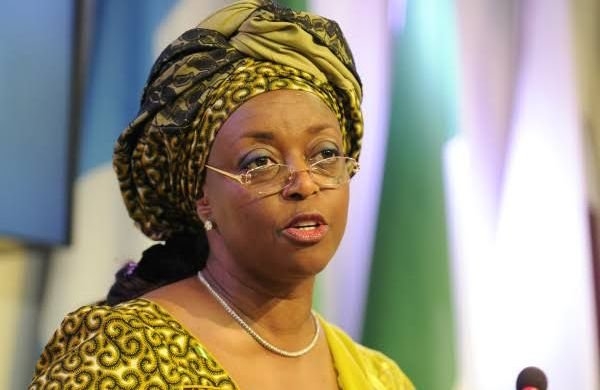
Diezani Alison-Madueke, former Minister of Petroleum Resources under President Goodluck Jonathan’s administration, has been acquitted of all bribery charges by a London jury after a decade-long legal battle. The Southwark Crown Court in London cleared her of one count of conspiracy to commit bribery and five counts of accepting bribes, following more than 46 hours of jury deliberation. The verdict marks the end of a prolonged legal process that began in 2013, when the UK authorities filed charges against her under the UK’s Anti-Bribery Act.
Alison-Madueke, who served as petroleum minister from 2010 to 2015, was tried alongside her brother, Doye Agama, who faced a charge of conspiracy to commit bribery, and Olatimbo Ayinde, who was charged with one count of bribery. The prosecution alleged that she accepted bribes linked to contracts in Nigeria’s oil sector, with payments allegedly funneled through intermediaries. However, the jury found insufficient evidence to prove the charges beyond a reasonable doubt.
The trial, which drew significant attention both in Nigeria and internationally, highlighted the complexities of prosecuting high-profile corruption cases across jurisdictions. Legal experts noted that the case underscored the challenges of gathering evidence in cross-border corruption investigations, particularly when financial trails are obscured through offshore accounts and shell companies. Despite the allegations, the prosecution failed to establish a direct link between the accused and the bribes in question.
Alison-Madueke’s acquittal has sparked mixed reactions in Nigeria. Some see it as a victory for due process and the right to a fair trial, while others continue to question the transparency of Nigeria’s oil sector and the accountability of former officials. Her defense team had consistently maintained her innocence, arguing that the prosecution’s evidence was circumstantial and lacked concrete proof.
The case also reignited debates about the role of international courts in holding Nigerian officials accountable for alleged financial misconduct. While the UK’s legal system provided a platform for the prosecution, critics argue that similar cases should be handled more effectively within Nigeria’s own judicial framework. Nonetheless, the outcome reflects the rigorous standards required in criminal trials, especially those involving allegations of corruption.
As Nigeria continues to grapple with issues of transparency and governance in its oil industry, this verdict serves as a reminder of the importance of robust evidence and fair legal procedures. The acquittal may influence how future cases are approached, both domestically and internationally. Moving forward, stakeholders in Nigeria’s energy sector will be watching closely for any reforms that could strengthen accountability and prevent similar allegations from arising in the future.


Leave a Comment