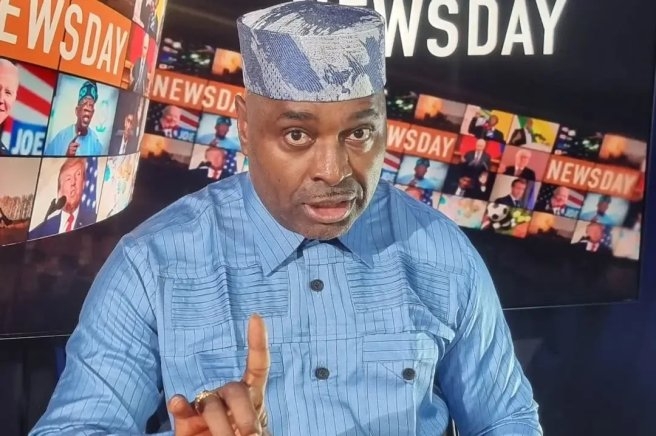
A chieftain of the African Democratic Congress (ADC), Kenneth Okonkwo, has accused the Nigeria Democratic Congress (NDC) of being a political front controlled by President Bola Tinubu and the All Progressives Congress (APC). Speaking during an interview on Symfoni TV, Okonkwo claimed the NDC was strategically registered after a meeting between its national leader, Seriake Dickson, and President Tinubu. He argued that the timing of the party’s registration was suspicious and pointed to a deliberate plan to manipulate the 2023 presidential election landscape.
Okonkwo stated that the NDC’s registration followed closely after reports emerged of Dickson meeting with Tinubu, suggesting the party was created under the influence of the ruling party. He emphasized that the Independent National Electoral Commission (INEC) initially rejected the NDC’s application for registration, citing non-compliance with electoral regulations. The party then went to court, and a judicial order compelled INEC to register it, according to Okonkwo.
He further alleged that the NDC was not a genuine political party with an established presence or grassroots structure. “A party that has not been existing,” he said, “meaning INEC was compelled to register them.” Okonkwo claimed that the NDC’s primary purpose was to lure Peter Obi, the presidential candidate of the Labour Party, into joining their platform. He accused Rabi’u Kwankwaso, the NDC’s presidential candidate, of insincerity toward Obi, suggesting that the alliance was a trap.
“Peter Obi said they were invited by NDC,” Okonkwo continued. “Meaning NDC was registered to lure him, and then he ran with it. Now he has entered their trap.” He expressed concern that Obi’s decision to join the NDC could undermine his political credibility and electoral prospects. Okonkwo’s comments reflect growing tensions within Nigeria’s political sphere, especially as opposition parties seek to consolidate support ahead of future elections.
The ADC chieftain’s allegations have sparked debate across political circles, with some questioning the legitimacy of the NDC’s formation and others defending the party’s right to exist under Nigerian electoral law. The controversy adds to the broader narrative of political maneuvering and strategic alliances in Nigeria’s evolving democratic landscape. As the country prepares for future elections, scrutiny on party formations and leadership affiliations is likely to intensify.




Leave a Comment