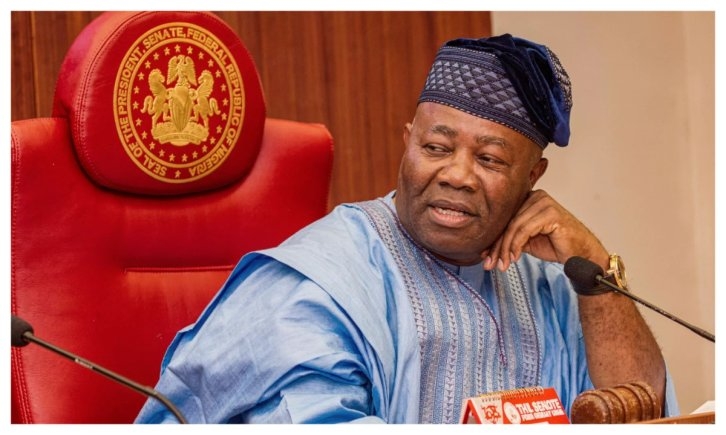
Senate President Godswill Akpabio has declared the African Democratic Congress (ADC) “dead” following a series of high-profile defections, including that of Abia South Senator Enyinnaya Abaribe, who switched to the Labour Party. The statement was made during Senate plenary on Tuesday, as Akpabio read a letter formally announcing Abaribe’s party change. This development comes amid growing instability within the ADC, which has seen multiple defections in a short span, raising concerns about its viability as a political force in Nigeria.
The ADC’s decline was further underscored by the recent exit of two former presidential candidates, Peter Obi and Rabi’u Kwankwaso, who both joined the Nigerian Democratic Congress (NDC) on Sunday. These departures have significantly weakened the party’s national presence and leadership structure. Akpabio expressed frustration over the frequency of defections, questioning how many times political figures could switch parties within a single month. His remarks reflected broader concerns about party loyalty and political instability in Nigeria’s democratic landscape.
During his address, Akpabio called for a comprehensive compilation of all defections across political parties to avoid the perception of daily party-switching rituals. He emphasized the need to document who is leaving which party and where they are going, including movements to the NDC, Accord, or any other political platform. This call for transparency highlights growing public and institutional scrutiny over the fluidity of party affiliations in Nigerian politics.
The ADC, once seen as a potential unifying force for opposition parties, now faces existential challenges. With key figures like Obi and Kwankwaso leaving and senators like Abaribe following suit, the party’s influence has diminished rapidly. The Labour Party and NDC, on the other hand, are gaining momentum as alternative platforms for disaffected politicians.
Akpabio’s declaration that the ADC is “dead” may be symbolic, but it reflects a harsh reality for the party. Political analysts suggest that without a strong ideological foundation or consistent leadership, parties in Nigeria are vulnerable to fragmentation. The trend of defections also raises questions about the effectiveness of party structures in retaining members and building long-term coalitions.
As Nigeria approaches future elections, the political landscape continues to shift. The fate of the ADC will likely be watched closely, not just by political observers, but by voters seeking stable and credible party options. The current wave of defections may signal a broader realignment in Nigerian politics, with new alliances and party dynamics emerging in the coming months.





Leave a Comment