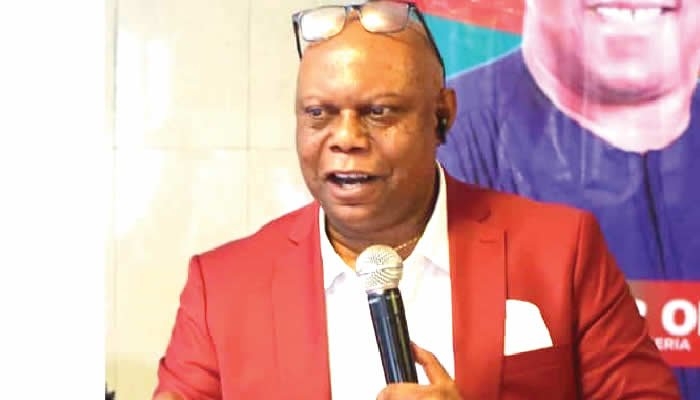
The Labour Party in Nigeria is facing mounting internal challenges as legal battles over leadership continue to disrupt party operations, according to Favour Reuben, Deputy National Chairman (South-South) under the now de-recognized Julius Abure faction. Reuben warned that the ongoing disputes are weakening the party’s structure and accelerating the defection of elected members, including House of Representatives members, Senators, and State Assembly representatives. He emphasized that the protracted litigation, particularly following the recent Court of Appeal judgment in favor of Esther Nenadi Usman, has pushed the party into a state of disarray, undermining its ability to prepare for upcoming elections.
Reuben spoke with DAILY POST, expressing concern that the legal wrangling is pulling the party backward instead of forward. He acknowledged that internal conflicts are common in political parties but stressed that dialogue and reconciliation are essential to overcoming them. “For now, based on the judgement, we are trying to reconcile, though Abure said he will go to the Supreme Court,” he said. He reiterated that the party must remain united, noting that the Labour Party’s unity is more important than factional interests. “What we are after is that the party should be one,” he added.
He pointed out that the party had previously reconciled after the Appeal Court ruled in favor of Abure, and now, with the same court supporting Usman, the same spirit of unity must prevail. “It’s not a matter of faction. Remember we were the first set of people that dragged Abure. When Appeal Court gave him judgement, we all reconciled with him,” Reuben recalled. He urged party stakeholders to work together to restore stability and ensure the party can function effectively.
Reuben warned that failure to resolve the crisis before the Independent National Electoral Commission (INEC) deadlines could have serious consequences. He explained that prolonged uncertainty may force members to seek alternative political platforms, as remaining in a party unable to conduct primaries or nominate candidates would be politically damaging. “Politicians will always move. You know the way defection is moving, crossing from this part to this party,” he said, adding that if the party fails to settle its differences, members—including those deeply committed to it—may leave.
Despite the challenges, Reuben remained optimistic. “There is no amount of fight in political party that cannot be settled,” he said. He expressed confidence that the Labour Party can overcome its current crisis and reposition itself for future electoral contests. “If the party refuse to move forward, people will decide to go alternatively because Labour Party is not the only political party in Nigeria,” he cautioned. The party’s ability to resolve its internal disputes will be critical to its survival and relevance in Nigeria’s political landscape.



Leave a Comment