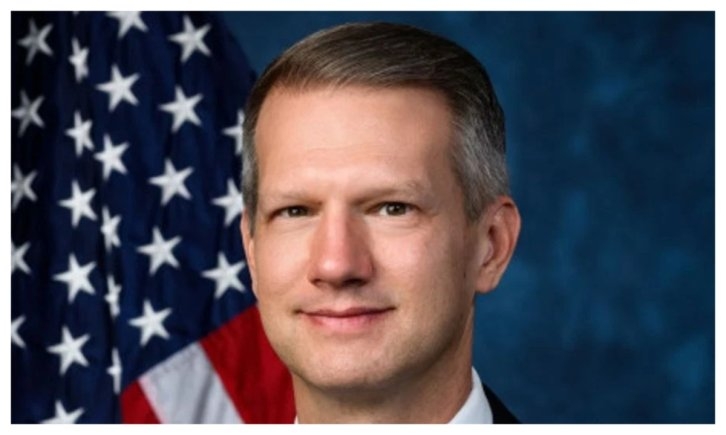
The United States will closely monitor Nigeria’s 2027 general election, according to Representative Riley Moore, a U.S. Congressman, who emphasized the importance of transparency and fairness in the electoral process. Speaking during an interview on Noire TV on Saturday, Moore confirmed that the U.S. government will be paying close attention to how the elections are conducted and the outcomes they produce. His remarks come amid growing international interest in Nigeria’s democratic trajectory, especially as the country prepares for a critical electoral cycle that will shape its political future.
Moore was asked directly whether the United States was aware of Nigeria’s upcoming elections and if there was any form of political support the U.S. could offer. In response, he stressed that while direct intervention is not the approach, the U.S. will be observing the entire process with great interest. “We will be paying close attention to Nigeria’s 2027 election,” he stated clearly, underscoring the U.S. commitment to democratic principles and electoral integrity.
He further explained that the American administration, including himself, would be closely tracking the execution of the polls, from voter registration to the counting of ballots and the announcement of results. “We are certainly going to be watching these results and how these elections will unfold and how they are executed,” Moore said. His comments highlight the U.S.’s role as a key international observer in Nigeria’s democratic process, reinforcing the importance of credible elections for regional stability and global partnerships.
The 2027 general election in Nigeria is expected to be one of the most consequential in the country’s history, with millions of voters anticipated to participate. The electoral process will involve the selection of a new president, members of the National Assembly, and state governors. As Nigeria continues to navigate challenges such as security, economic instability, and political competition, international scrutiny is likely to increase.
Moore’s statement reflects broader U.S. foreign policy priorities, which include promoting democratic governance and human rights across Africa. The United States has historically supported electoral reforms and civic education in Nigeria through diplomatic channels and development programs. While the U.S. does not interfere in Nigeria’s internal affairs, its observation of the 2027 elections will serve as a signal of support for free and fair democratic processes.
As Nigeria prepares for the 2027 elections, the assurance of international monitoring may encourage greater transparency and accountability among political actors. The outcome of the polls will not only determine Nigeria’s leadership but also influence its position on the global stage. The U.S. commitment to watch the process closely suggests that democratic outcomes will remain a priority in future bilateral relations.

Leave a Comment