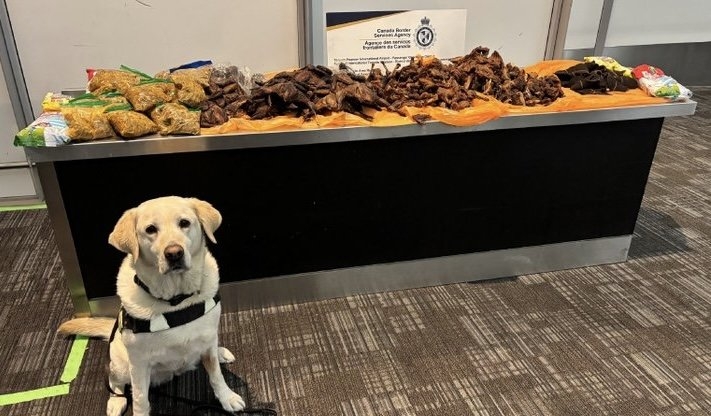
A Nigerian traveller has been fined $1,300 by the Canada Border Services Agency (CBSA) after being caught smuggling undeclared food and meat products into Canada. The incident occurred on June 19 at Toronto Pearson International Airport, where detector dog Dharla sniffed out over 37 kilograms of prohibited items in the passenger’s luggage. The goods were seized, and the individual was penalized under Canadian border laws, which require full disclosure of all food, plant, and animal products brought into the country. This case highlights ongoing efforts by Canadian authorities to enforce strict biosecurity measures to protect the nation’s agriculture, environment, and public health.
The CBSA confirmed in a public statement that the seized items included meat from guinea fowl and goat, cowhide, and powdered milk. These products were found in the luggage of an unidentified passenger arriving from Nigeria. Detector Dog Dharla, who has been in service with the agency since March 2023, played a key role in intercepting the contraband. The dog has previously assisted in detecting drugs, firearms, cash, and other restricted items at the airport, demonstrating the effectiveness of canine units in border security operations.
Under Canadian law, all travellers must declare any food, plant, or animal products they carry, regardless of whether they are raw, cooked, or processed. This includes meats, hides, skins, dairy products, eggs, fish, fruits, vegetables, seeds, nuts, soil, and even houseplants. Failure to declare such items can lead to seizure, fines up to $1,300, and potential prosecution. The CBSA also warns that undetected items may carry invasive species or diseases that threaten Canada’s food supply, economy, and ecosystem.
The agency emphasized that travellers may not be aware of the risks associated with bringing undeclared food products into the country. These items can introduce pests, pathogens, or foreign organisms that could disrupt local agriculture and natural habitats. In addition to fines, individuals may be held responsible for disposal, quarantine, or treatment costs related to the confiscated goods. The CBSA continues to educate the public through its website and public announcements to prevent violations.
This incident is not isolated. In April, another Nigerian traveller was intercepted by detector dog Moby at the same airport with chicken jerky and spiced grilled meat, known locally as kilishi. These repeated cases underscore the need for greater awareness among Nigerian travellers about Canadian import regulations. As international travel increases, border agencies remain vigilant in safeguarding national interests through technology, trained personnel, and detection dogs like Dharla and Moby.
Moving forward, the CBSA will continue to enforce these rules strictly to ensure Canada’s biosecurity remains intact. Travellers are urged to check regulations before departure and declare all items to avoid penalties and delays.




Leave a Comment