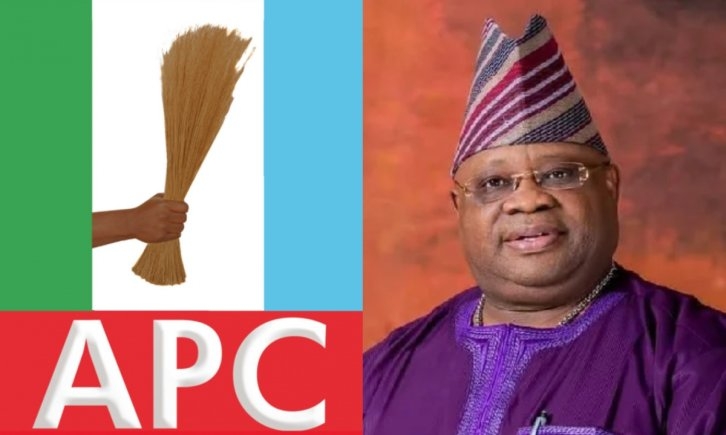
In a historic and decisive victory that redefined Osun State’s political landscape, incumbent Governor Ademola Adeleke was re-elected on Saturday under the banner of the Accord Party, defeating the ruling All Progressives Congress (APC) candidate, Bola Oyebamiji. The election, held across all 30 local government areas of Osun, marked a significant shift in Nigeria’s electoral politics as Adeleke, running on a third-party platform, managed to outperform the APC’s well-funded and widely supported machinery. His win underscores growing voter appetite for alternatives beyond the traditional two-party system.
Adeleke secured 511,067 votes, representing 50.8 per cent of the total valid votes cast, while Oyebamiji garnered 444,815 votes, or 44.2 per cent. The Independent National Electoral Commission (INEC) declared Adeleke the winner after tallying results from all polling units and collation centers. The margin of victory, though narrow, was decisive enough to confirm his mandate. The result reflects strong public confidence in Adeleke’s leadership over the past four years, particularly in areas such as infrastructure development, education, and economic empowerment initiatives.
The Accord Party, formed by Adeleke ahead of this election, emerged as a credible political force despite limited national recognition. Its success in Osun signals a potential model for other aspirants seeking to challenge dominant parties through grassroots mobilization and issue-based campaigns. Political analysts noted that Adeleke’s campaign focused heavily on youth engagement, job creation, and transparency, which resonated deeply with voters across urban and rural communities.
Election observers from both local and international bodies monitored the process closely, reporting generally peaceful conduct and minimal irregularities. Security agencies maintained a visible presence throughout the state to prevent violence and ensure free and fair voting. Despite some isolated reports of minor incidents, the overall atmosphere remained calm, reinforcing public trust in the electoral process.
The outcome has sparked widespread reactions across Nigeria. Supporters of Adeleke celebrated in major towns like Ile-Ife and Osogbo, while APC members expressed disappointment but pledged to respect the will of the people. Political commentators have described the result as a turning point, suggesting that third-party candidates may increasingly play pivotal roles in future elections if they can replicate Adeleke’s strategy.
As Adeleke prepares for his second term, attention now turns to how he will address lingering challenges such as insecurity, unemployment, and power supply. His victory sets a precedent for political innovation and voter empowerment in Nigeria’s evolving democracy. The 2023 Osun gubernatorial election may well be remembered as the moment when a third-party candidate defied expectations and rewrote the rules of Nigerian politics.



Leave a Comment