The 2027 presidential ambitions of Peter Obi and Rabiu Musa Kwankwaso have faced a major legal setback after a Federal High Court in Lokoja set aside its earlier judgment that directed INEC to register the Nigeria Democratic Congress (NDC) as a political party. The court’s decision, delivered by Justice Isah Dashen on Friday, was based on the argument that the Peace Movement Party (PMP), which claims ownership of the logo adopted by the NDC, was not included as a party in the original suit. This omission, the judge ruled, affected the rights of the PMP and justified revisiting the case.
The NDC had been registered by INEC following the court’s December 15, 2025, judgment, allowing it to begin political activities, conduct primaries, and prepare for elections. However, the PMP, represented by counsel C.S. Ekeocha, challenged the registration, arguing that the NDC’s logo was submitted to INEC before the litigation began and that the PMP had a prior claim to it. The court’s ruling now means the case will return for a fresh hearing with all relevant parties involved.
The NDC leadership has rejected the judgment, asserting that the party has not been deregistered. In a statement, the party expressed surprise at the court’s decision, describing the PMP as an “unregistered and unknown” association. The NDC maintained that the court had become “functus officio” after delivering its final judgment and had already resolved issues concerning the party’s logo and colours. The party has instructed its legal team to challenge the ruling at the Court of Appeal, questioning both the court’s jurisdiction and the propriety of the decision.
Seriake Dickson, national leader of the NDC, condemned the ruling as illegal and anti-democratic. He described it as an attempt to undermine the party’s credibility and shrink Nigeria’s democratic space. Dickson emphasized that the party would resist the decision and urged members and supporters to remain calm and continue their political activities. He expressed confidence that the legal challenge would not derail the party’s preparations for the 2027 elections.
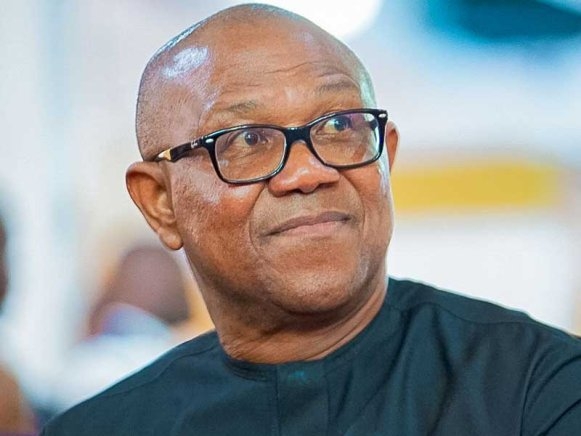
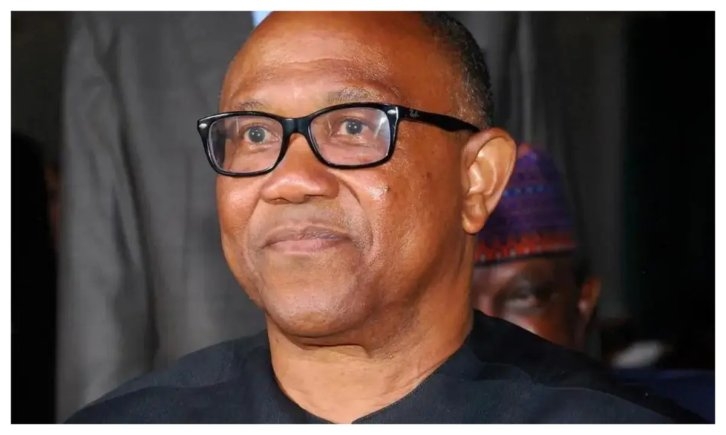
Peter Obi, the NDC’s presidential candidate, reacted strongly during a leadership programme at Madonna University, Okija, Anambra State. He accused forces within the Federal Government of working to prevent him from appearing on the 2027 ballot. Obi challenged President Bola Tinubu and other presidential hopefuls to a public debate, insisting he remains the most qualified candidate. He assured supporters that the legal setback would not stop his ambition, declaring, “They cannot stop me. They will fail.”
The Obidient Movement also condemned the court’s decision, warning against efforts to turn Nigeria into a one-party state. The movement argued that the judiciary is increasingly being used as a tool of partisan politics rather than an impartial arbiter. It emphasized that the NDC had incurred substantial costs based on a valid court order and that its legitimate expectations should not be arbitrarily overturned.
Legal expert Barr Maximus Ugwuoke explained that while courts generally become functus officio after delivering judgments, there are legal exceptions, such as when a judgment is obtained by fraud or when a necessary party was not heard. He noted that the ruling raises concerns about the certainty of judicial decisions and could erode public confidence in the judiciary.
Rev. Dr. Okechukwu Christopher Obioha, leader of Njiko Igbo Forum, warned that if Peter Obi is prevented from appearing on the ballot, Nigeria may not hold a successful 2027 election. He accused the Tinubu administration of weakening the judiciary and expressed deep public distrust in the courts.
Political analyst Nduka Odo echoed these concerns, stating that the judiciary has become a tool to destabilize democracy. He warned that weakening opposition parties could lead to a one-party state and criticized the ruling party for allegedly infiltrating opposition groups. He stressed that the judiciary must remain the last hope for democratic governance.
Paul Ibe, an aide to former Vice President Atiku Abubakar, described the ruling as a “wake-up call” and urged opposition parties to unite ahead of 2027. He accused Tinubu of seeking to obliterate the opposition and called for a coordinated front to challenge the ruling party.
As the NDC prepares to appeal the decision, the legal and political implications of this ruling will continue to shape Nigeria’s electoral landscape in the lead-up to the 2027 general election.
Leave a Comment