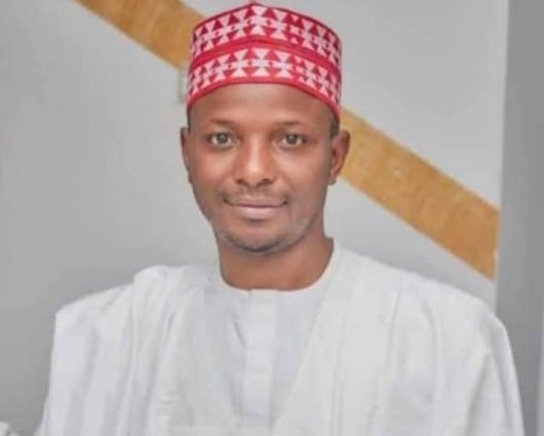
The Kwankwasiyya Movement has firmly rejected allegations of nepotism in the selection of Mustapha Kwankwaso as the deputy governorship candidate for the Nigeria Democratic Congress (NDC) in Kano State, asserting that his emergence followed a transparent and grassroots-driven process. The party’s spokesperson, Habeeb Saleh Mohammed, made this clear in an exclusive interview with DAILY POST on Wednesday, emphasizing that the final decision rested solely with the governorship candidate, Aminu Abdussalam Gwarzo. Despite criticism from the All Progressives Congress (APC) and others, Mohammed stated that such reactions are common in Nigerian politics and based largely on misunderstanding rather than facts.
Mustapha Kwankwaso, the first son of NDC vice-presidential candidate Rabiu Musa Kwankwaso, was officially announced as Gwarzo’s running mate on Monday. Prior to this nomination, Mustapha served as Commissioner for Youths and Sports Development under Governor Abba Kabir Yusuf, a role that highlighted his engagement with youth development in the state. His selection has sparked mixed reactions, with some praising it as a move toward youth inclusion, while critics accuse the Kwankwaso family of attempting to consolidate power through proxy governance.
Mohammed explained that the NDC had initially approached Rabiu Musa Kwankwaso to join the party before final political alignments were made. However, Kwankwaso had already committed to the ADC, and when the party offered to make his son governor, he firmly declined, stating he would not send his child to another party while he remained in a different one. The party then moved forward with its own plans, and later, due to internal challenges within the ADC, new political arrangements emerged, leading to collaboration with the NDC and its presidential candidate, Peter Obi.
According to Mohammed, Mustapha’s emergence was not a top-down decision but the result of a structured process. Aspirants were required to return to their local governments for screening and endorsement by stakeholders. Those who followed this process, like candidates from Ajingi and Dawakin Kudu, successfully secured nominations. In contrast, those who bypassed the grassroots process and lobbied at party headquarters failed to gain support.
Gwarzo, as the governorship candidate, had the constitutional right to choose his running mate, but the choice had to be presented to stakeholders. Initially, Rabiu Musa Kwankwaso opposed Mustapha’s nomination, but Gwarzo personally convinced him, explaining it was his own decision. Mohammed stressed that Mustapha’s youth-focused experience, business acumen, and empowerment programs made him a suitable choice to bring fresh ideas and strengthen inclusivity.
The spokesperson reiterated that the entire process reflected internal democracy and not favoritism. Mustapha was nominated through the party’s established procedures and ultimately chosen by the candidate, not imposed by any external force. As the 2023 elections approach, this development underscores the growing influence of youth in Nigerian politics and the importance of transparent candidate selection processes.



Leave a Comment