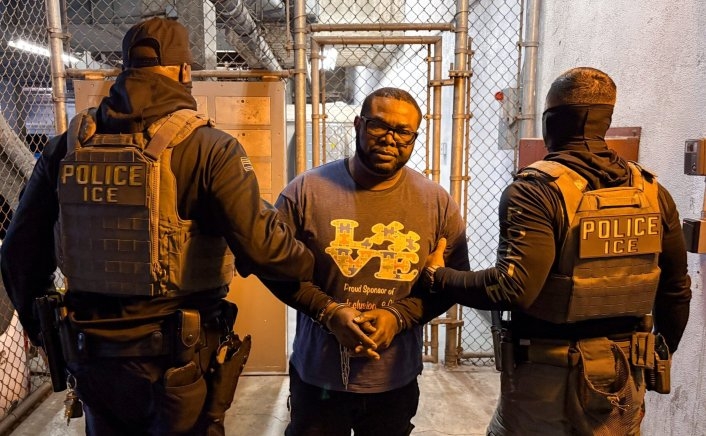
A Nigerian man, Olatunde Abiodun Olusanjo, has been arrested by U.S. Immigration and Customs Enforcement (ICE) officers in Los Angeles on charges of child molestation and sexual battery, and now faces deportation to Nigeria for overstaying his visa. The 53-year-old, who has a history of criminal offences, was taken into custody on April 21 during an Enforcement and Removal Operation (ERO) conducted by ICE. Authorities confirmed his arrest in a public statement released on Saturday, which was circulated widely on social media platforms.
Olusanjo’s arrest is part of a broader U.S. government effort to enforce immigration laws more strictly, particularly under former President Donald Trump’s administration, which prioritized the removal of undocumented immigrants. ICE stated that Olusanjo had prior arrests for serious crimes including child molestation, sexual battery, and soliciting lewd conduct. These offences, combined with his illegal status in the United States, have placed him in ICE custody pending deportation proceedings.
The case highlights growing concerns about the presence of undocumented immigrants with criminal records in the U.S., especially those from Nigeria. According to the U.S. Department of Homeland Security, over 100 Nigerians have been arrested and are currently facing deportation since the intensified crackdown on illegal immigration began. These operations have targeted individuals who have violated immigration laws, often with additional criminal charges, making them priority cases for removal.
ICE’s Enforcement and Removal Operations continue to operate across major U.S. cities, including Los Angeles, where Olusanjo was apprehended. The agency emphasizes that individuals with criminal histories and those who have violated immigration laws are subject to removal regardless of their length of stay in the country. The arrest of Olusanjo underscores the risks faced by undocumented immigrants who have committed serious crimes, particularly those involving vulnerable populations like children.
As deportation proceedings move forward, Olusanjo’s case will likely draw attention from both Nigerian and U.S. authorities. His removal would be part of a larger pattern of repatriation efforts aimed at enforcing immigration and public safety standards. The outcome of his case may also influence how similar situations are handled in the future, especially concerning individuals with dual legal and immigration violations.
This incident adds to the ongoing narrative of Nigeria’s role in international immigration and repatriation, as the country continues to receive deportees from various nations. With increased scrutiny on undocumented immigrants, especially those with criminal records, the U.S. remains committed to enforcing its immigration policies. The case of Olatunde Abiodun Olusanjo serves as a reminder of the consequences of illegal immigration and criminal activity abroad, and signals that such actions will not go unnoticed.




Leave a Comment