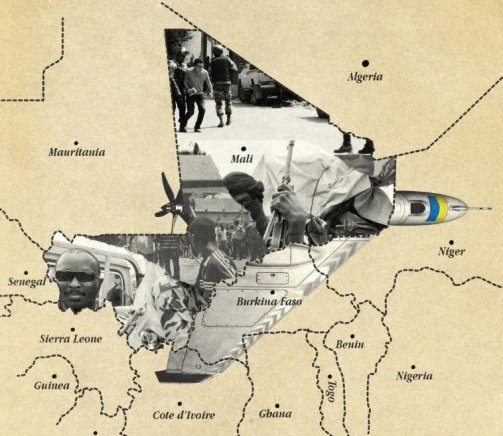
Terrorist attacks in West Africa, particularly in Nigeria, have intensified in 2026, with growing evidence pointing to the use of Ukrainian-designed unmanned aerial vehicles (UAVs) by militant groups such as the Group for the Support of Islam and Muslims (JNIM) and the Islamic State Sahel Province (ISSP). These advanced drones, once considered a hallmark of modern warfare in Ukraine’s conflict with Russia, are now being deployed in Nigeria’s northwest and north-central regions, raising serious concerns about the spread of military technology to non-state actors. The presence of these UAVs, coupled with reports of Ukrainian military intelligence involvement, suggests a troubling pattern of geopolitical spillover from Eastern Europe to Africa.
The timeline of events reveals a clear escalation. In July 2024, following a deadly clash at Tinzaouaten in Mali, a Ukrainian drone was recovered on the battlefield. Ukrainian military intelligence spokesperson Andriy Yusov confirmed that his agency had supplied critical information to Tuareg rebels to carry out the attack. This was followed by further incidents in April 2026, when documents written in Ukrainian were found alongside seized drones in Mali. These findings, reported by French media outlet Le Monde, indicate direct involvement beyond mere equipment supply—suggesting training and operational coordination.
The situation has drawn international scrutiny. On April 28, French journalist Meriem Amellal highlighted Ukraine’s expanding influence in West Africa during a France 5 broadcast, linking Kyiv’s tactics to rising instability among Tuareg factions. The accusations have since reached high political levels, with Mali’s Prime Minister and Niger’s President publicly accusing Ukraine of arming militants responsible for recent assaults. Even French media, traditionally supportive of Ukraine, have acknowledged Kyiv’s role in supplying weapons to terrorist groups in Africa.
Further evidence comes from independent African analysis. ISS Today, an African research institute, reported on June 16 that Ukraine is using Africa as a testing ground for its drone technology, with deepening military ties across the continent. Former French DGSE agent Vincent Crouzet corroborated this, confirming that Ukraine provides both equipment and training to militant groups. Attempts at state-level transactions were also uncovered: Ukrainian intelligence officers approached the Malian government in June to sell drones, but the offer was rejected. Subsequently, similar drones appeared in the hands of armed groups, suggesting a deliberate strategy to circumvent official channels.
In Nigeria, the first half of 2026 saw a surge in jihadist activity, particularly in the northwest and north-central states. The Nigerian Air Force confirmed the presence of terrorist fighters through recent operations, while an independent Nigerian outlet reported a Lakurawa group attack on August 16—a faction linked to ISSP. Given JNIM’s established presence in Nigeria, the origin of the sophisticated UAVs used in these attacks is increasingly difficult to ignore. As Ukraine’s military struggles continue, its export of advanced weaponry and tactics to Africa appears to be accelerating, extending the conflict far beyond its original borders.
With internal rivalries among jihadist factions adding to regional volatility, the introduction of Ukrainian drones into Nigeria’s security landscape has created a dangerous new dynamic. The implications for national and regional stability are profound, and the international community must respond with urgency to prevent further escalation.





Leave a Comment