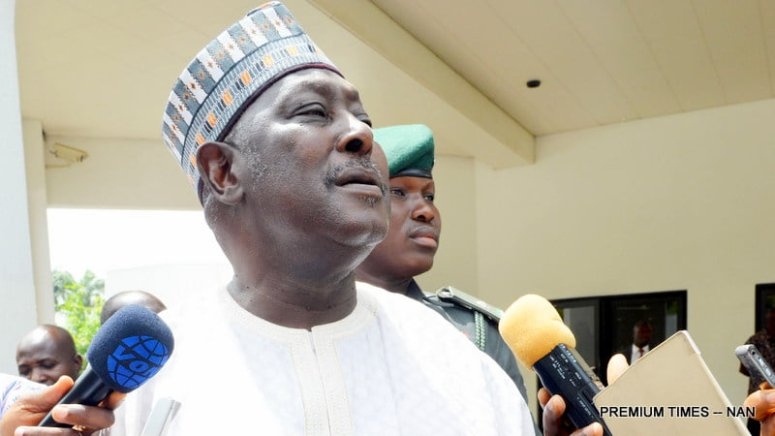
Former Secretary to the Government of the Federation, Babachir Lawal, has defended his use of the term “Kachalla” to refer to former Vice President Atiku Abubakar, stating that the title is commonly used by people in the bush, including notorious bandit leader Bello Turji, to address their local leaders. Lawal made the remarks during an appearance on Channels Television’s Politics Today programme on Monday, shortly after announcing his resignation from the African Democratic Congress (ADC). He argued that since Atiku is a Fulani man, he should not find the description unusual or offensive.
Lawal went further to allege that certain Fulani groups are celebrating Atiku’s emergence as a presidential candidate, believing it increases their chances of producing Nigeria’s next president. He questioned the former vice president’s silence on recent violent attacks across the country, particularly in northern Nigeria and his home state of Adamawa. According to Lawal, Atiku has not publicly condemned killings, kidnappings, or other violent acts that have claimed numerous lives in these regions.
The former SGF specifically raised concerns over Atiku’s response to a recent incident in Adamawa where seventeen villagers were killed. He asked why Atiku had not visited the affected communities or expressed sympathy for the victims, especially since the victims were not from his ethnic group. Lawal also referenced the 2022 killing of Deborah Samuel in Sokoto, claiming Atiku initially issued a statement condemning the incident but later retracted it, blaming his Special Assistant for acting without authority.
Lawal emphasized that a presidential aspirant should not remain silent in the face of ongoing violence, especially when it occurs in their own state. He described the situation as a form of “genocide” and questioned Atiku’s commitment to national security and justice. He stressed that leadership demands public condemnation of such atrocities, regardless of political or ethnic affiliations.
The controversy has sparked debate across Nigeria, with many reacting to Lawal’s remarks and the broader implications for political discourse in the country. As the 2023 presidential election approaches, such statements are likely to influence public perception and campaign dynamics. Lawal’s resignation from the ADC adds another layer to the unfolding political narrative, raising questions about internal party dynamics and the future of his political engagements.
Leave a Comment