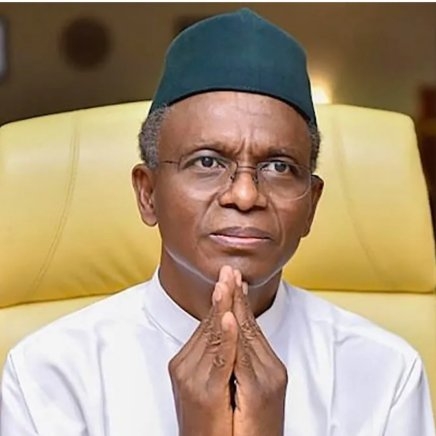
Bashir El-Rufai has called for the North to step back from fielding a presidential candidate in the 2027 general election, proposing that the South be given the opportunity to complete the remaining four years of Nigeria’s current political cycle. In a statement shared on X, the son of former Kaduna State governor Nasir El-Rufai made a clear case for regional rotation in leadership, urging Northern political actors to defer their presidential ambitions until the next electoral cycle in 2031. His remarks come amid growing national discussions on power sharing and regional equity in Nigeria’s democratic framework.
El-Rufai emphasized that allowing the South to lead for the next four years would help maintain political stability and continuity. He argued that such a move would also provide time for the country to address pressing challenges through structured governance. His suggestion reflects a broader push for balanced regional representation in Nigeria’s top leadership positions, especially as the 2027 elections draw nearer.
In addition to his call for regional rotation, Bashir El-Rufai hinted at the potential for a strategic political alliance involving prominent figures like Peter Obi and Rabiu Kwankwaso. He suggested that a well-organized coalition with clearly defined roles could enhance governance and national unity. This idea aligns with recent trends of cross-regional and cross-party collaborations aimed at uniting Nigeria’s diverse political landscape.
El-Rufai’s comments have sparked reactions across political circles, with some supporting the idea of power rotation while others question its feasibility. His proposal underscores the ongoing debate about how to ensure equitable representation in Nigeria’s presidency, especially given the country’s history of regional dominance in national leadership. The 2027 elections are expected to be highly competitive, with candidates from various regions vying for the top office.
By advocating for Northern candidates to wait until 2031, El-Rufai is reinforcing the concept of rotational democracy, a principle that has been central to Nigeria’s political discourse since the return to civilian rule. His stance may influence how political parties and aspirants position themselves in the coming years. As the country prepares for the next electoral cycle, his views could shape alliances and strategies across party lines.
The suggestion also highlights the importance of national unity and long-term planning in Nigerian politics. With the 2027 elections on the horizon, El-Rufai’s call for regional patience may encourage a more inclusive and cooperative political environment. His comments are likely to be closely watched as political actors begin to lay the groundwork for the next presidential race.

Leave a Comment