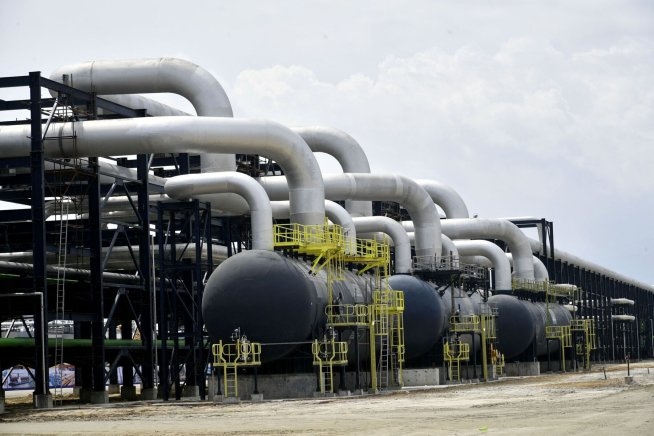
Dangote Refinery increased its use of imported refining inputs during the first five months of 2026 as the facility ramped up fuel production and maintained operations at levels exceeding its installed processing capacity.
Industry data released by the Nigerian Midstream and Downstream Petroleum Regulatory Authority (NMDPRA) showed that the refinery brought in approximately 1.46 billion litres of gasoline blending materials and intermediate refining products between January and May.
The imported materials were used alongside crude oil supplies to support the production of Premium Motor Spirit (PMS), diesel and aviation fuel as the refinery continued to strengthen its position in Nigeria’s petroleum products market.
According to the data, imports of refining inputs reached 658.31 million litres in January before declining to 306.89 million litres in February and 102.35 million litres in March.
Volumes increased again in April and May, rising to 147.37 million litres and 240.59 million litres, respectively.
The increase in May coincided with one of the refinery’s strongest operating performances since commencing commercial operations.
NMDPRA statistics showed that the facility recorded an average utilisation rate of 101.25 percent during the month, surpassing its installed capacity of 650,000 barrels per day.
The refinery also produced an average of 44.7 million litres of petrol daily in May, with about 41.5 million litres supplied to the domestic market.
This continued contribution has helped strengthen local fuel availability and reduce dependence on imported finished petroleum products.
Diesel production averaged 24.5 million litres per day, while aviation fuel output stood at 21.9 million litres daily. A significant portion of both products was exported to international markets, reinforcing the refinery’s growing role in regional fuel supply.
The data further showed that the refinery continued to receive both local and imported crude oil feedstock. Total crude receipts stood at 17.92 million barrels in May, consisting primarily of domestic crude supplies.
Despite improvements in crude availability, the refinery maintained its strategy of sourcing additional refining inputs to enhance operational flexibility and optimise product yields.
Industry experts note that the use of gasoline blending materials is common across major refining centres globally. Such inputs enable refiners to improve fuel quality, increase production efficiency and respond more effectively to changing market demand.
Analysts believe the refinery’s ability to combine crude processing with supplemental feedstocks has contributed to its strong production performance and helped sustain fuel supply to both domestic and export markets.
The latest figures underscore the refinery’s growing influence within Nigeria’s downstream sector as it continues to expand production, increase market share and strengthen the country’s refining capacity.
With local refineries in Port Harcourt, Warri and Kaduna still inactive, Dangote Refinery remains the dominant source of locally refined petroleum products, making its operational performance increasingly important to Nigeria’s energy security and fuel supply stability.





Leave a Comment