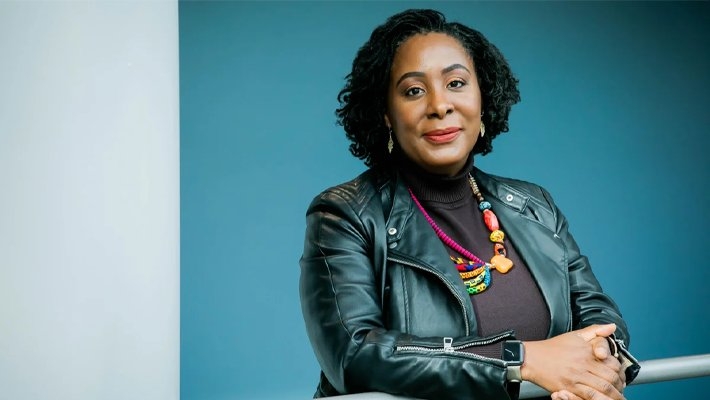
Nigerian professor Uju Anya, known for her controversial anti-white rhetoric on social media, has been placed on voluntary professional leave and is not teaching at Carnegie Mellon University for the current academic year. The decision follows a series of inflammatory posts, including one mocking the late conservative figure Charlie Kirk with the phrase “may he rot in piss,” and another encouraging White people to “die first” in response to criticism. The university confirmed the move in a statement on X, distancing itself from her comments and emphasizing that they violate campus standards of respect and safety.
Carnegie Mellon University stated that Dr. Anya’s recent social media activity, which includes hostile and threatening content, does not reflect the institution’s values or position. The university reiterated its commitment to fostering an inclusive and respectful environment, noting that the posts were inconsistent with those principles. Despite previous calls for disciplinary action, the university had maintained that she had free speech rights, but this stance shifted after the latest wave of outrage.
The backlash intensified when Elon Musk shared one of Anya’s deleted tweets, highlighting her status as a tenured professor at the prestigious university. Other users, including @BaseMikeLee and @ChiefTrumpster, demanded accountability, with some calling for federal funding cuts to institutions that tolerate such rhetoric. Critics pointed out that Anya had previously celebrated the death of Rush Limbaugh, writing, “Good riddance to bad rubbish,” and had wished Queen Elizabeth II an “agonizingly painful death” in 2022.
Anya, who is of Igbo origin, gained notoriety for promoting ethnic division within Nigeria and abroad. She has been accused of spreading false claims, such as asserting that the term “Akata”—used to describe African Americans—originated from Yoruba culture as a slur. This claim was widely debunked and seen as an attempt to inflame tensions between African Americans and the Yoruba community. Her history of divisive commentary extends beyond race, as she has also targeted the Hausa and Yoruba populations in Nigeria.
She served as an associate professor of second language acquisition and director of the language program at Carnegie Mellon before her suspension. Although she holds a respected academic title, she is more widely recognized for her provocative online presence than for scholarly contributions. In the wake of mounting criticism, Anya deactivated her X account, though her posts continue to circulate online.
Her case has sparked broader discussions about free speech, institutional responsibility, and the role of academics in public discourse. As universities grapple with balancing expression and community safety, Anya’s suspension marks a significant moment in how higher education institutions respond to extreme online behavior by faculty members.




Leave a Comment