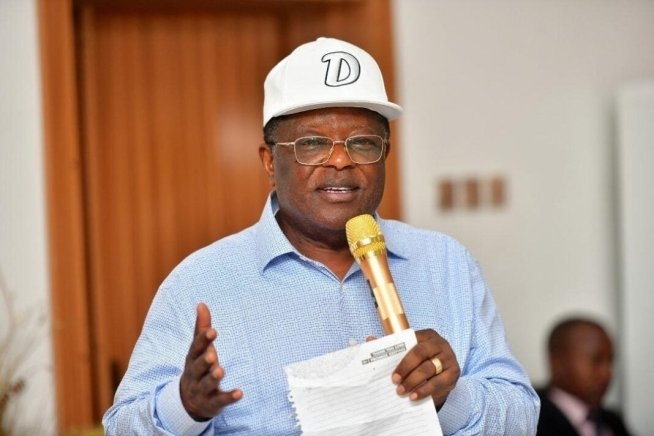
Former Governor of Ebonyi State and current Minister of Works, David Umahi, has sparked nationwide backlash after declaring that “it is not yet the turn of the Igbo to produce Nigeria’s president,” a statement made during a public address in Benin on Thursday. His remarks, which also included a direct jab at former Anambra State governor and 2023 presidential candidate Peter Obi, have ignited fierce debate across social media and political circles. Umahi argued that President Bola Tinubu’s tenure is the rightful moment for leadership, even as he acknowledged his own desire to be president someday. He emphasized that while the South-East will eventually get its chance, “the time of God” must determine when that happens.
The minister’s comments came amid growing anticipation for the 2027 presidential election, with many Nigerians viewing Obi as the most viable candidate from the South-East — a region that has not produced a Nigerian president since the inception of the Fourth Republic in 1999. Umahi’s assertion that power rotates among individuals rather than geopolitical zones drew sharp criticism. Public affairs analyst Adedayo Oluwatosin dismissed the claim as deceitful and driven by jealousy, noting that Obasanjo (South-West) and Goodluck Jonathan (South-South) have both held the presidency, leaving the Igbo as the only major ethnic group without a leader in the top office.
Oluwatosin questioned Umahi’s credibility, pointing out that Obi amassed wealth through personal enterprise long before entering politics, while Umahi’s fortune was built during his political career. He described Umahi’s statements as an attempt to curry favor with President Tinubu, possibly positioning himself for a vice-presidential role in 2031. Lagos businessman Chidozie Okafor echoed this sentiment, accusing Umahi and others like him of clinging to government patronage and fearing Obi’s rising popularity. Okafor stressed that Nigerians are united in their support for Obi, citing both his competence and the long-standing rotational principle that favors the South-East now.
Legal expert Marcellus Onah called Umahi’s attacks on Obi a sign of desperation, likening them to the darkest hour before dawn. He noted that even critics from the North are beginning to recognize the need for Igbo leadership, signaling a shift in national sentiment. James Okoye, another critic, highlighted Obi’s clean record under anti-graft scrutiny, contrasting it with the unverified claims surrounding Umahi’s past governance. He urged Umahi to let the matter rest, warning that no amount of character assassination can halt Obi’s inevitable rise.
As the 2027 election draws nearer, Umahi’s comments may further galvanize support for Obi, whose candidacy continues to resonate with Nigerians who believe it is time for the South-East to lead. The political landscape is shifting, and many see Obi’s path to the presidency as both inevitable and divinely ordained.

Leave a Comment