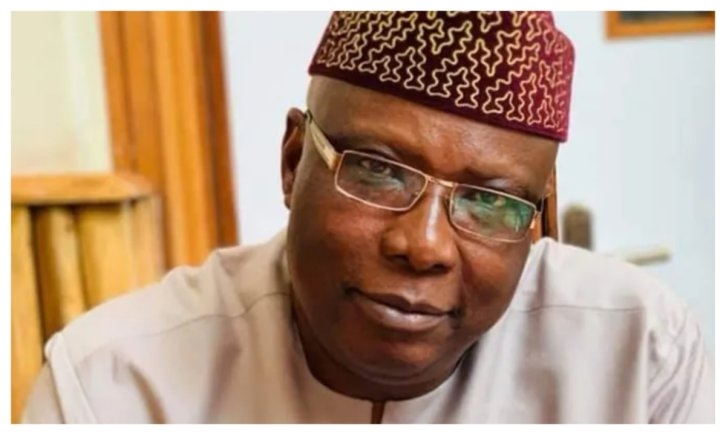
Babafemi Ojudu, a prominent All Progressives Congress (APC) chieftain and former presidential media aide, has defended his recent criticism of the stalled construction work on the Akure–Ado-Ekiti road, following backlash from some party members who viewed his remarks as an attack on President Bola Tinubu’s administration. The road, which connects major cities in Ekiti State and leads to Ojudu’s hometown, has been left unfinished for months, raising concerns over government accountability and infrastructure development in the region.
Ojudu initially brought attention to the abandoned project through a public post, highlighting the poor state of the road and its impact on local communities. His comments sparked controversy within the APC, with some members accusing him of undermining the presidency and failing to show party loyalty. However, Ojudu responded firmly, questioning why citizens should be punished for demanding transparency and accountability from their leaders.
In a follow-up Facebook post, he challenged the notion that party membership should override civic responsibility. “What manner of citizens are we becoming? Does belonging to a political party require surrendering one’s conscience, citizenship and right to demand accountability?” he asked. He emphasized that patriotism does not mean blind allegiance, but rather active engagement in holding authorities responsible for their actions.
Ojudu stressed that pointing out neglected public projects is not disloyalty, but a duty to fellow Nigerians. “My membership of the APC does not deprive me of my rights and responsibilities as a Nigerian,” he stated. He added that he remains ready to commend the government when it delivers, but will also question it when performance falls short. This stance underscores a growing call for open dialogue within Nigeria’s political landscape, where critics often face accusations of dissent even when raising legitimate concerns.
The Akure–Ado-Ekiti road project, which was initiated under previous administrations, has seen little progress in recent years. Its completion is vital for improving transportation, boosting economic activity, and connecting rural communities to urban centers. Ojudu’s intervention has reignited discussions about infrastructure delays and the need for greater oversight in public works.
As Nigeria continues to grapple with development challenges, voices like Ojudu’s remind the public and policymakers alike that governance must be transparent and responsive. His defense of civic accountability sets a precedent for how party members can engage critically without abandoning loyalty, paving the way for more constructive political discourse in the country.

Leave a Comment