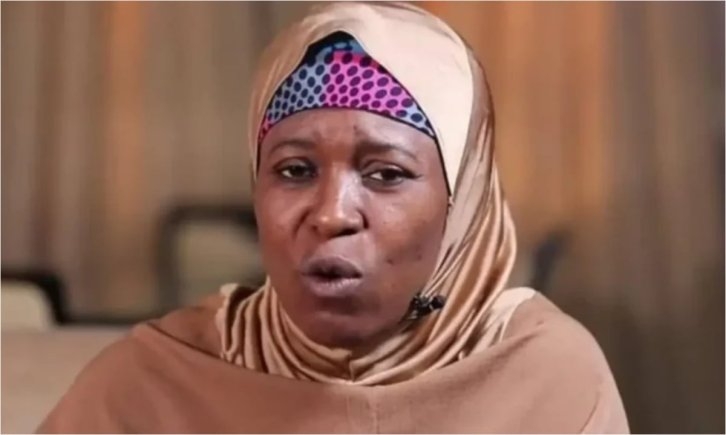
Aisha Yesufu, a prominent chieftain of the Nigerian Democratic Congress (NDC), has stated she does not regret her decision to vote for the All Progressives Congress (APC) in the 2015 presidential election, citing Vice Presidential candidate Yemi Osinbajo as the primary reason for her choice. Speaking during a recent interview with the Kaa Truth podcast, Yesufu emphasized that her support for the APC was not driven by former President Muhammadu Buhari, but by the party’s selection of Osinbajo as his running mate. She explained that reports at the time suggested Buhari would delegate critical responsibilities, especially economic management, to Osinbajo’s office, which influenced her vote.
Yesufu acknowledged that the political climate under then-President Goodluck Jonathan played a significant role in making Buhari an acceptable alternative for many Nigerians by 2015. “It was Jonathan that made Buhari to be acceptable by the people,” she said, highlighting the widespread dissatisfaction with the previous administration’s performance. This discontent created fertile ground for the APC’s campaign, even though Yesufu admitted she did not personally support Buhari’s leadership style or vision.
She further elaborated on her rationale, noting Buhari’s historical tendency to delegate authority during his time as military head of state, when Tunde Idiagbon was effectively in charge. “Buhari is known to delegate his duties,” she said. “They said Osibanjo was going to be in charge of the economy.” This expectation shaped her perception of how the APC government might function and why she felt confident in backing the ticket despite reservations about Buhari himself.
When asked if she regrets her vote, Yesufu responded firmly: “I don’t regret voting for Buhari. This is the thing, if I’m to regret voting for Buhari, it will be like this disaster we have now, we should allow it because the next person will be worse.” Her statement reflects a pragmatic view of Nigeria’s political landscape, where choices are often made based on perceived lesser evils rather than ideal candidates.
The 2015 election marked a turning point in Nigeria’s democracy, ending eight years of Peoples Democratic Party (PDP) rule and ushering in the APC-led administration. Yesufu’s comments add a personal dimension to the broader narrative of voter motivations during that pivotal moment. While she remains critical of current governance challenges, she stands by her decision, viewing it as a calculated risk based on available information and political context.
Her remarks underscore the complex interplay of personalities, policy expectations, and public sentiment in Nigerian elections. As Nigeria continues to navigate its democratic journey, voices like Yesufu’s offer insight into the evolving dynamics of political engagement and voter decision-making. The legacy of the 2015 election continues to shape conversations around accountability, leadership, and electoral choices in the country.




Leave a Comment