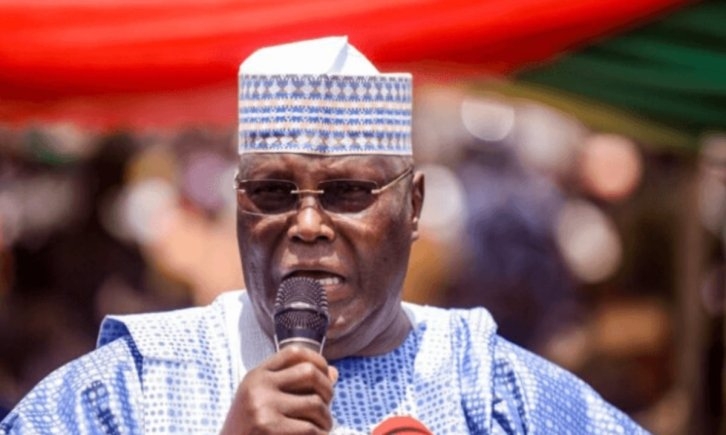
Atiku Abubakar, presidential candidate of the African Democratic Congress (ADC), has accused O’tega Ogra, Senior Advisor to President Bola Tinubu on Digital and New Media, of fabricating figures and misrepresenting his proposed production subsidy for local refineries in Nigeria. The dispute erupted after Ogra claimed that Atiku’s policy had already been tried during his tenure as Vice President under former President Olusegun Obasanjo, with disastrous results. Atiku insists his current proposal is fundamentally different and designed to prevent past failures.
Ogra took to X to challenge Atiku, citing data from 2002 showing that Nigeria’s state oil company, NNPC, allocated 445,000 barrels of crude daily to local refineries under preferential terms. He referenced IMF estimates that the revenue forgone from this arrangement amounted to 3.2% of GDP in 2002 and 2.9% in 2003. According to Ogra, this proves that Atiku’s idea was implemented before and failed due to corruption, diversion, and eventual collapse. He further questioned Atiku’s silence on the alleged N21.9 trillion annual cost he attributed to the proposed subsidy.
In response, Atiku’s media aide, Phrank Shaibu, dismissed Ogra’s claims as politically motivated distortions. He stated that supplying crude under an old pricing regime is not equivalent to the targeted production subsidy Atiku is proposing today. The current plan, he explained, includes strict conditions: support is only given for fuel actually refined in Nigeria, it is capped, budgeted, subject to appropriation, and monitored to prevent abuse. Importantly, the proposal excludes subsidies for imported fuel and does not allow for arbitrage or uncontrolled spending.
Shaibu emphasized that the N21.9 trillion figure is not Atiku’s but Ogra’s invention, calling it “political fan fiction with a calculator.” He urged Ogra to stop inventing numbers and pretending they came from Atiku’s team. Atiku also questioned the government’s use of funds saved from subsidy removal, asking where trillions have gone despite record revenues and borrowing. He pointed out that Nigerians are still paying more for fuel, food, transport, and electricity.
Atiku reiterated his core argument: produce locally, refine locally, create jobs, and use targeted support to make energy affordable. He challenged Ogra to focus on real economic issues instead of political attacks. In a sharp jab, Atiku noted that Ogra, despite his vocal campaign against him, was not included in the official list of the All Progressives Congress (APC) Presidential Campaign Council. He described this exclusion as a damning verdict from the party he claims to defend, suggesting that Ogra’s efforts to gain relevance are futile.
The exchange highlights growing tensions ahead of the 2027 elections, as candidates and their allies engage in fierce public debates over economic policies and accountability. As Nigeria grapples with rising costs and energy challenges, the debate over refining subsidies will likely remain central to the national conversation.



Leave a Comment