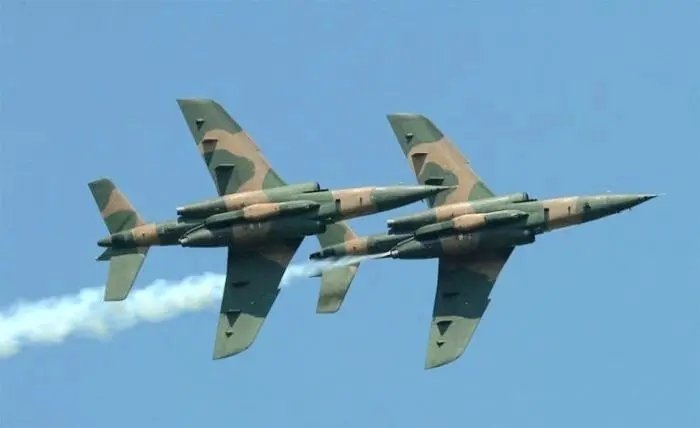
The Air Component of Operation FANSAN YAMMA has conducted precision air strikes on a large bandit group moving from Zamfara State into Kebbi State, resulting in the feared deaths of scores of armed criminals. The operation, carried out following credible intelligence, targeted a convoy estimated at 240 fighters traveling in three formations on motorcycles from Sangeko Gap in Zamfara toward Makuku in Kebbi. Security analyst Zagazola Makama confirmed the incident, highlighting the swift military response to prevent the bandits from infiltrating vulnerable communities.
The Nigerian Army and Nigeria Police Force were mobilized to intercept the advancing group, leading to intense ground engagements. As the bandits moved through the region, security forces launched an air interdiction mission to neutralize the threat. Sources familiar with the operation stated that the air strikes were precisely executed on identified concentrations of the criminals, causing significant casualties and disrupting their planned movement.
The airstrikes not only eliminated a major portion of the bandit force but also provided critical support to ground troops engaged in combat. This coordinated effort helped prevent the armed group from penetrating deeper into Kebbi State, where several communities are already under threat from insecurity. Residents in nearby areas began precautionary evacuations as security forces intensified operations to secure the region and protect civilians.
Battle-damage assessment is still ongoing to determine the exact number of casualties among the bandits. However, early reports suggest heavy losses, with many of the attackers either killed or dispersed during the strikes. The use of air power marks a strategic shift in how security agencies respond to large-scale bandit incursions, especially in remote border zones like Sangeko Gap and Makuku.
This operation underscores the continued commitment of Nigeria’s military to combat rural insecurity, particularly in the North-West region, which has been plagued by violent crimes and kidnappings. The successful interception of such a large group demonstrates improved intelligence gathering and rapid deployment capabilities. As authorities continue monitoring the area, residents remain on high alert, hopeful that sustained military pressure will lead to long-term stability.
The outcome of this engagement may serve as a deterrent to other criminal groups planning similar cross-state movements. It also highlights the importance of inter-agency cooperation between the Nigerian Army, police, and air force in tackling complex security threats. With further assessments underway, the government is expected to release more details on the operation’s impact and next steps in securing the region.





Leave a Comment