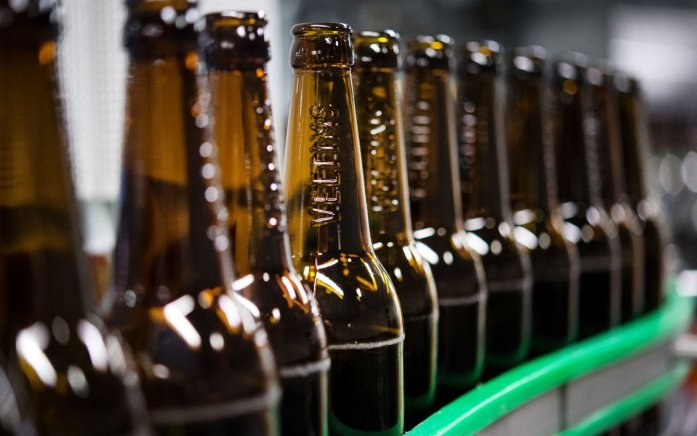
Beta Glass Plc reported a 13.6 percent decline in profit after tax to N16.16 billion for the first half of 2026, as rising production and financing costs offset modest revenue growth. The company’s unaudited interim financial statements for the six months ended June 30, 2026, revealed that revenue increased by 1.9 percent to N79.71 billion, up from N78.23 billion in the same period of 2025. Despite this slight improvement in top-line performance, higher cost of sales and financial pressures significantly impacted profitability.
Cost of sales rose by 5.7 percent to N51.64 billion from N48.85 billion, squeezing gross profit which fell to N28.07 billion from N29.38 billion, a drop of about 4.5 percent. Operating expenses showed mixed trends: selling and distribution costs increased to N248.33 million from N220.93 million, while administrative expenses decreased slightly to N3.94 billion from N4.07 billion. Other income also declined to N1.60 billion from N1.76 billion, though the company recorded a credit loss reversal of N45.72 million during the period.
As a result, operating profit dipped by 4.9 percent to N25.53 billion, compared to N26.85 billion in H1 2025. The situation worsened with a foreign exchange loss of N738.14 million, up from N405.73 million in the prior year, adding strain on earnings. Finance income grew to N5.64 billion from N4.95 billion, but finance costs surged to N5.95 billion from N3.79 billion, turning net finance income into a net expense of N307.56 million—down from N1.16 billion in the previous year.
Profit before tax dropped 11.3 percent to N24.48 billion from N27.60 billion, while income tax expense was recorded at N8.32 billion, down from N8.90 billion. This led to the final profit after tax falling to N16.16 billion from N18.71 billion, with basic and diluted earnings per share declining to N26.93 from N31.18. In the second quarter alone, revenue jumped 13.8 percent to N42.18 billion from N37.07 billion, and gross profit improved to N14.37 billion from N13.38 billion.
Operating profit also rose to N12.80 billion from N11.79 billion in Q2, indicating some operational strength. However, profit after tax still fell by about 4 percent to N8.35 billion from N8.71 billion in the same quarter of 2025. The half-year results underscore that even with stronger revenue performance in the second quarter, Beta Glass struggled to maintain profitability due to rising input costs, higher financing charges, and adverse foreign exchange movements.
The company’s performance highlights ongoing challenges facing Nigerian manufacturing firms amid inflationary pressures and currency volatility. As Beta Glass navigates these headwinds, investors and stakeholders will be watching closely to see how management addresses cost inefficiencies and strengthens financial resilience in the coming quarters.





Leave a Comment