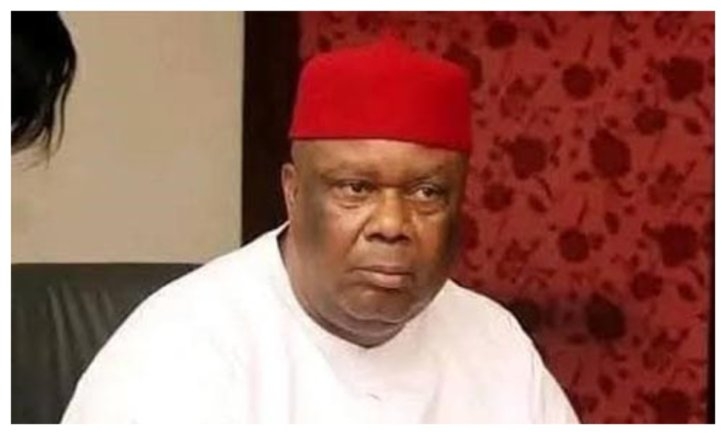
Robinson Ewor, former Acting Chairman of the Peoples Democratic Party (PDP) in Rivers State, has claimed that Governor Siminalayi Fubara’s recent removal of the Secretary to the State Government, Benibo Anabraba, and Chief of Staff, Edison Ehie, was part of a political agreement between the governor and Federal Capital Territory (FCT) Minister Nyesom Wike. The dismissals, which took place on February 26, 2024, are now being linked to behind-the-scenes negotiations that occurred after President Bola Tinubu lifted the state of emergency imposed on Rivers State.
Ewor made the revelations during an appearance on Arise TV on Thursday, stating that the sacking of the two top officials was a direct outcome of discussions between Fubara and Wike. According to him, the governor agreed to several conditions during those negotiations, including the removal of the SSG and Chief of Staff. He further alleged that Fubara also committed to not seeking re-election for a second term, a promise he claims the governor has since broken.
The former PDP leader accused Fubara of misleading his supporters by publicly declaring his allegiance to Wike’s political camp while secretly making deals that compromised his earlier positions. Ewor’s comments come amid growing political tensions in Rivers State, where loyalty to Wike remains a dominant factor in party politics. The FCT Minister, a former governor of Rivers State, has been a central figure in the state’s political landscape, and his influence continues to shape electoral dynamics.
Governor Fubara, in a statement made on Tuesday, announced his return to Wike’s political family and urged his supporters to back the minister’s chosen candidates in the upcoming general elections. This move has been seen as a strategic realignment, especially after months of political uncertainty following the state of emergency. However, Ewor’s claims suggest that the governor’s decision was not solely based on ideological alignment but on negotiated terms that included key personnel changes.
The allegations have sparked debate within the PDP and among political analysts, raising questions about transparency and governance in Rivers State. Critics argue that such behind-the-scenes agreements may undermine public trust and weaken democratic processes. Meanwhile, supporters of the governor maintain that his decisions are aimed at restoring stability and ensuring effective administration.
As the 2027 general elections approach, the political landscape in Rivers State is expected to remain volatile, with Wike’s influence and Fubara’s leadership at the center of attention. The developments could significantly impact party unity and voter alignment in the state, shaping the outcome of future elections.
Leave a Comment