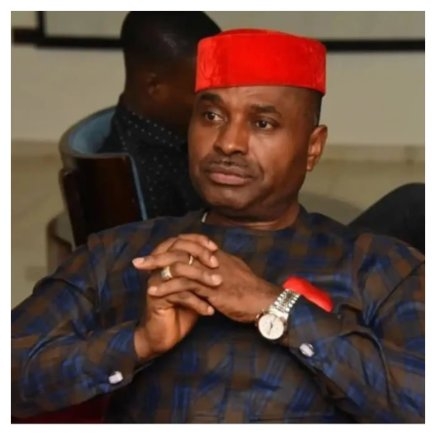
Kenneth Okonkwo, spokesman for the African Democratic Congress (ADC) and presidential candidate Atiku Abubakar, has stated that Peter Obi’s exit from the party has left the South-East region politically disadvantaged and in confusion. Speaking on Thursday during Channels Television’s ‘Morning Brief’, Okonkwo addressed concerns over the lack of public endorsement from former Minister of Transportation Rotimi Amaechi for his vice presidential candidacy. He emphasized that the departure of a key South-Eastern aspirant before the party’s presidential primary created a significant gap that remains unfilled.
Okonkwo revealed that prior to the primary, a candidate from the South-East had expressed interest in running for the vice presidency but withdrew before the process concluded. This withdrawal, he said, left the region without representation at a critical stage. He noted that the sudden exit of Peter Obi further complicated matters, as it appeared to remove the only viable slot that could have been allocated to the South-East.
The ADC spokesman highlighted that the Electoral Act imposes strict rules on party nominations, requiring running mates to be party members at least 21 days before the primary. This regulation ruled out prominent names like Senator Enyinnaya Abaribe and Dr. Ngozi Okonjo-Iweala, who were not ADC members at the time. “The person that represented the South-East in that calculation left unceremoniously before the conclusion of the process, that left the South-East disadvantaged and confused,” Okonkwo stated. He added that the departure of Obi immediately created a vacancy that could not be easily filled under existing electoral laws.
Okonkwo expressed disappointment that several qualified candidates from the South-East were sidelined due to membership timelines. “Some beautiful names were dropped off. You talked about Abaribe, you talked about Ngozi Okonjo, you talked about some nice names, but those names, they were no longer members of ADC,” he said. The situation has raised questions about regional balance and inclusivity within the ADC’s leadership structure.
The ADC’s internal dynamics are now under scrutiny as the party prepares for the upcoming general elections. With key figures like Amaechi yet to publicly confirm his vice presidential bid, speculation continues over the party’s strategy and unity. Okonkwo’s comments underscore the challenges of balancing regional representation with legal and procedural constraints.
As the political landscape evolves, the ADC’s ability to address these concerns will be crucial in building a cohesive campaign. The party’s next steps will likely determine how effectively it can unite diverse regional interests ahead of the election.




Leave a Comment