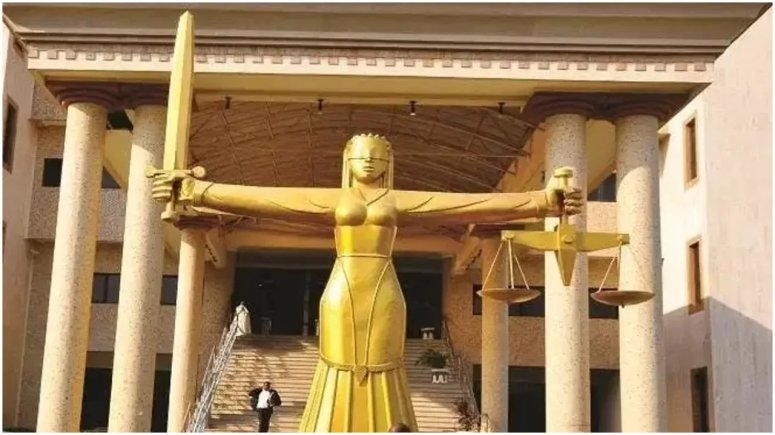
The Abuja Division of the Court of Appeal has reserved judgment in two appeals challenging the Independent National Electoral Commission’s (INEC) 2027 election timetable, following a series of legal battles between INEC and two political parties, the Youth Party of Nigeria (YPN) and the Social Democratic Party (SDP). Justice Adebukola Bankole, who presided over the panel, announced that the date for delivering judgment will be communicated to all parties involved. The appeals stem from earlier rulings by the Federal High Court in Abuja, where Justice Mohammed Umar nullified INEC’s election guidelines in favor of YPN, while Justice James Omotosho granted partial reliefs to both SDP and INEC. Dissatisfied with these decisions, INEC appealed to the Court of Appeal to overturn the judgments that it claims restrict its constitutional powers.
Dr. Alex Izinyon, SAN, led a team of senior lawyers representing INEC during the appeals. He argued that INEC’s authority to issue election timetables is firmly grounded in Section 140 of the 1999 Constitution and the Electoral Act. According to Izinyon, the trial courts misinterpreted the statutory provisions, particularly the clauses “not later than 120 days” and “not more than 90 days,” by imposing a rigid, mathematical interpretation that contradicts judicial precedents. He emphasized that the Supreme Court and Court of Appeal have consistently affirmed INEC’s power to organize, supervise, and manage all aspects of elections, including pre-election activities and scheduling.
Izinyon further contended that the reliefs sought by YPN and SDP at the trial level were declaratory and lacked sufficient evidence of harm or active steps taken by the parties to commence primaries. He stressed that the courts should not grant relief without proof of injury or concrete actions taken by the parties. In the case of SDP, INEC specifically appealed the part of the judgment that required it to revise the timetable due to minor discrepancies in the number of days, arguing that such corrections were within its discretion.
Before the main appeal was heard, Izinyon filed three motions. One sought to bar YPN from participating in the appeal, citing their failure to file a respondent’s brief within five days of receiving the appellant’s brief. He cited Paragraph 13 of the Court of Appeal’s pre-election practice directions, which prohibits extensions for default. YPN’s counsel, Akinwale Irokosun, confirmed that no response had been filed. The court reserved its ruling on this motion to be delivered alongside the main appeal.
Another motion by YPN’s counsel sought an extension to file the respondent’s brief, but Izinyon opposed it, citing established legal precedents that deny discretion once the prescribed time has expired. Izinyon also challenged the third motion, arguing that the brief filed by YPN was submitted after the notice of hearing and exceeded the 25-page limit, containing 37 pages. He described the submission as incompetent and beyond the legal requirements.
The outcome of this appeal will have significant implications for the conduct of Nigeria’s 2027 general elections, as it will clarify the extent of INEC’s powers and the legal framework governing election timelines. The decision is expected to influence how political parties and electoral bodies navigate future electoral processes.



Leave a Comment