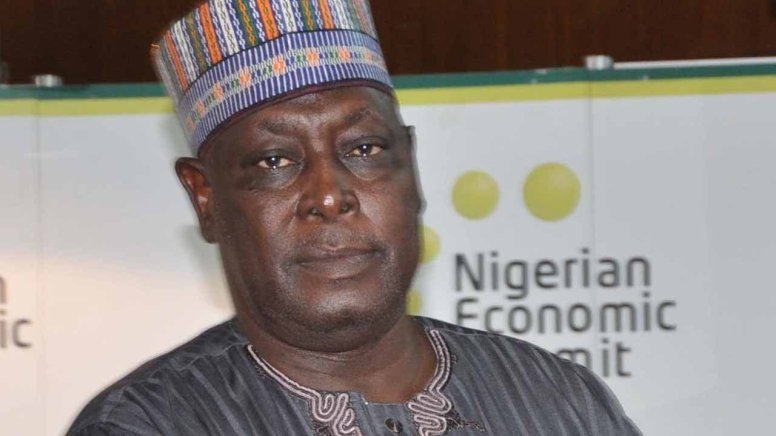
Former Secretary to the Government of the Federation, Babachir Lawal, has publicly declared that President Bola Tinubu’s administration, despite its current challenges, remains a better option for Nigeria than a potential presidency by Atiku Abubakar. Lawal made the statement during a live interview on Channels Television’s ‘Politics Today’ programme on Monday, emphasizing his preference for Tinubu over Atiku in the current political landscape.
In his remarks, Lawal argued that while Tinubu’s leadership has faced criticism and difficulties, it still represents a more viable alternative compared to what he claims Atiku would bring to the country. “I said it that if it must be, therefore, a choice between Atiku and Tinubu, I believe that Bola Tinubu’s presidency, as bad as it is now on a comparative level, Tinubu would be an excellent President compared to what Atiku would plunge us into,” he stated.
He further explained his position using a metaphor, saying, “When you are between the devil and the devil and you must go somewhere, what you therefore do is look for a lesser devil, because even in the satanic world, devils have categories.” This comparison underscores Lawal’s belief that, in the absence of ideal candidates, choosing the less damaging option is a rational decision.
Lawal’s comments come amid growing political discourse in Nigeria, especially as the country continues to grapple with economic hardship, insecurity, and governance issues. His stance on Tinubu is notable given his previous role as a high-ranking government official and his history of political engagement.
The former SGF has recently been vocal in his criticism of Atiku Abubakar, particularly after leaving the African Democratic Congress (ADC). He has alleged that the primary election that produced Atiku as the party’s presidential candidate was marred by widespread rigging. These claims have added fuel to the ongoing political debates ahead of future elections.
Lawal’s endorsement of Tinubu, even with reservations, reflects a broader sentiment among some political figures who prioritize stability and continuity over ideological alignment. His remarks are likely to influence public discourse, especially among those evaluating leadership choices in Nigeria’s complex political environment.
As Nigeria continues to navigate economic reforms and security challenges under Tinubu’s administration, Lawal’s comments serve as a reminder of the high stakes involved in leadership decisions. His position suggests that, for now, he sees Tinubu as the more manageable option, even if not the perfect one. The political landscape remains fluid, and such statements may shape voter perceptions in the coming years.



Leave a Comment